iPhone Games for Adults No Microtransactions: Mature Indie Titles 2026

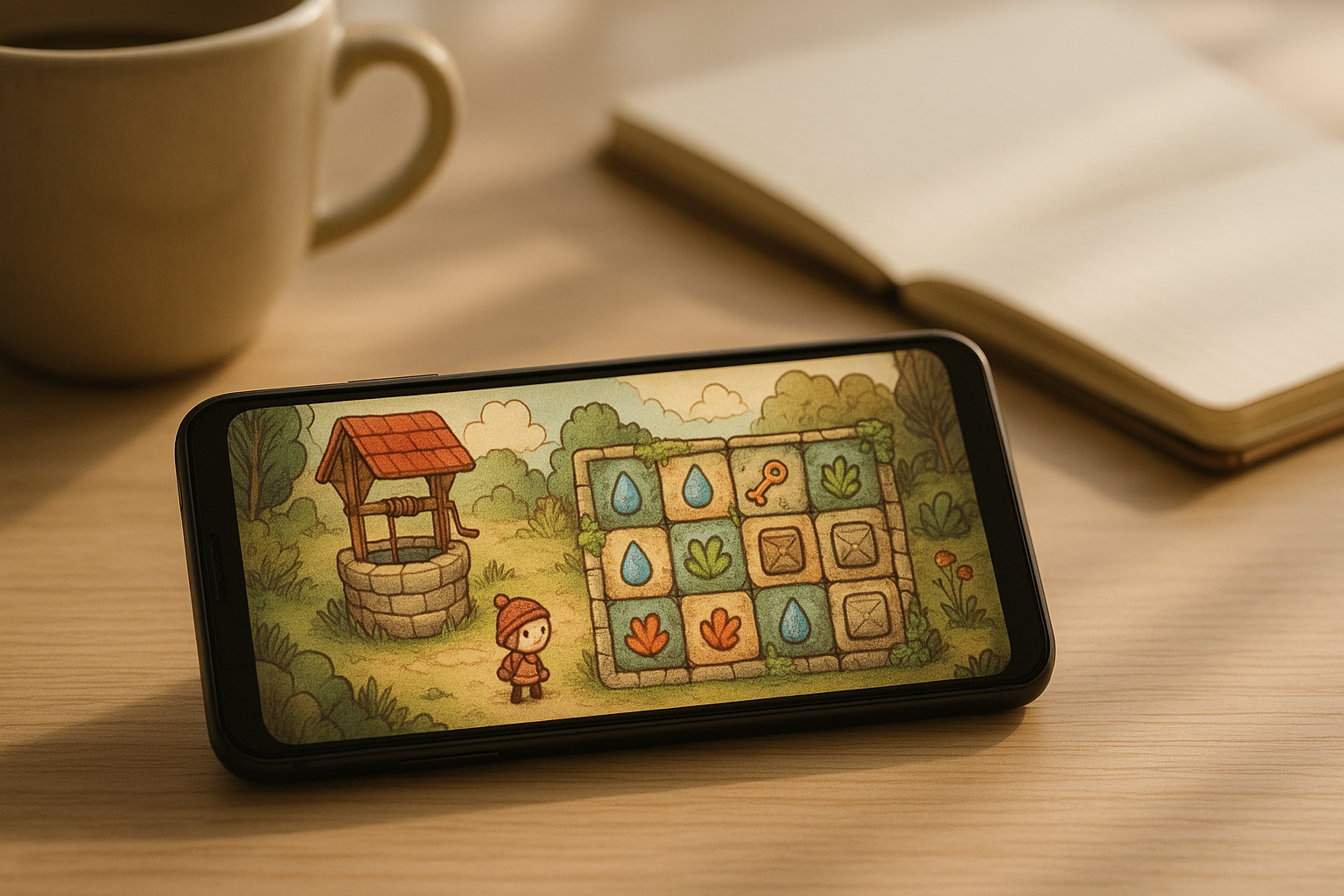
Photo by Onur Binay on Unsplash
iPhone Games for Adults No Microtransactions: Mature Indie Titles
If you’re tired of energy timers, battle pass notifications, and ads disguised as “premium” games, you’re not alone. Adult players on iOS want games that respect their time and money—one upfront purchase, then play. No tricks. No second monetization layer hiding behind a cosmetics shop.
In 2026, premium indie games have solidified as a distinct category on the App Store. Developers are shipping craft-built games that land between indie oddities and mainstream releases, games that ask for five to fifteen dollars and deliver 10–100 hours of actual play. This guide rounds up the best mature, premium iPhone games worth your money right now.
What “Premium” Actually Means Here
Before the picks: a definition. On the App Store, “premium” is a marketing label. Many games marked “premium” still run ads or IAP. Here, premium means one purchase, complete game, no ads, no in-app purchases, no subscription upsells. You buy it once. You own it. The developer got paid; you got a finished product. That’s the deal.
Games in this guide are also crafted—meaning the developer sweated the details. The UI doesn’t feel half-baked. The mechanics reward skill or patience, not luck or wallet depth. The art direction is coherent, not a grab-bag of asset-store leftovers.
Story-Driven Games for Contemplative Play
Kentucky Route Zero
A five-act magical-realist game about a truck driver’s final delivery along a secret highway. It’s not an action game; it’s a walking simulator with branching conversation and a hand-drawn art style that feels like a storybook. Each act is short enough for a lunch break, but the narrative payoff spans the full campaign. Per player reports on r/iosgaming, players consistently report finishing it in one or two sittings and thinking about it for weeks afterward.
The game respects your intelligence—it doesn’t explain the magic, and it doesn’t force a “correct” ending. Your choices reshape the story in subtle ways. If you’ve ever wanted a game that feels like a novel, this is it.
Oxenfree
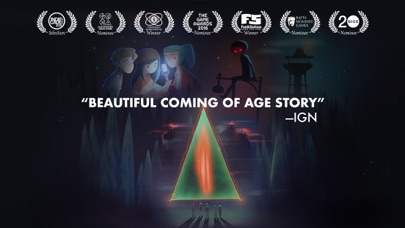
A supernatural mystery where you play a teen who accidentally tunes into a ghostly frequency during a beach party. The game’s signature mechanic is radio tuning—you hold down buttons to scroll through stations and trigger story moments, puzzles, and dialogue. It sounds gimmicky; it’s not. The radio becomes a natural extension of how you interact with the world.
The writing is sharp, the voice acting is understated, and the mystery unfolds without melodrama. Multiple playthroughs reveal different layers. Based on aggregated App Store reviews, players praise the pacing and the fact that no two playthroughs feel identical.
Puzzle Games with Real Depth
The Witness
A first-person exploration puzzle game set on a strange island. You walk around solving line-drawing puzzles. That’s the entire mechanic—draw lines on panels, solve the logic, unlock new areas. But the design is ruthless: each puzzle teaches you a rule, then breaks that rule, then combines rules in ways that shouldn’t work but do.
The Witness has no tutorial, no difficulty settings, no hand-holding. You either figure it out or you don’t. Per multiple owner reviews on the App Store, players report spending 20–40 hours on the main island alone, and some never finish it—by choice, because the joy is in the struggle. If you like puzzles that respect your problem-solving ability, this is non-negotiable.
Into the Breach
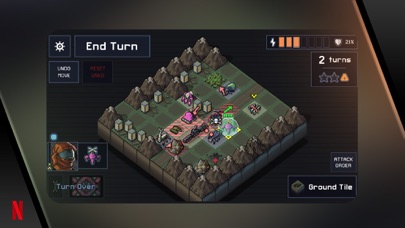
A turn-based tactics game where you control a squad of mechs defending cities from alien insects. The twist: you can see all enemy moves before you commit your own. This inverts the usual fog-of-war tension—instead of reacting to surprise attacks, you’re solving a spatial puzzle in real time, finding the sequence of moves that minimizes damage and maximizes kills.
Every playthrough is different because the enemy spawns are randomized, but the core loop is deterministic. You never feel cheated by RNG; you only feel clever when you find the perfect move. Per multiple owner reports on r/iosgaming, players return to it for years because each run is a fresh puzzle.
Arcade-Lineage Action Games
Asteroids+ Plus
A vector-graphics reimagining of the 1979 arcade classic. You rotate and thrust your ship, shooting asteroids that fragment into smaller chunks. But this version adds modern physics—asteroids have momentum, your shots have weight, and the screen wraps with a sense of depth that the original couldn’t achieve.
The game respects the arcade lineage without aping it slavishly. Endless mode lets you chase high scores; campaign mode introduces new enemy types and modifiers that force you to adapt. Based on aggregated App Store reviews, players report that it captures the meditative, skill-based feel of the original while feeling fresh on modern hardware.
Galaga Wars
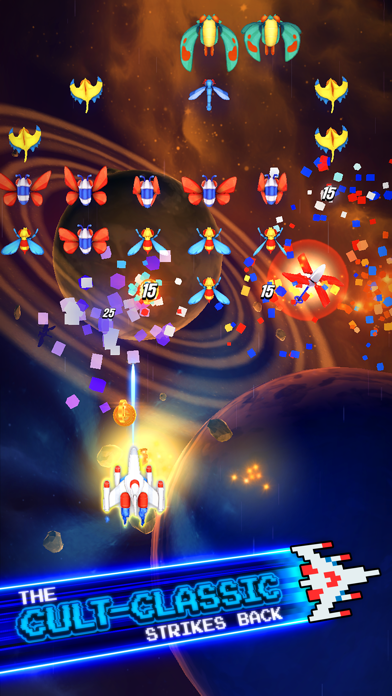
A vertical-scrolling shooter in the Galaga lineage, but with hand-drawn pixel art and a deliberate, measured pace. Your ship moves slowly; enemies move slowly. This isn’t a twitch game—it’s about positioning and patience. You learn enemy patterns and exploit them.
The craft here is in the restraint. A less disciplined developer would have added power-ups, screen shake, and visual noise. Instead, the game is clean, readable, and focused. Per long-running threads on r/iosgaming, players who grew up on arcade shooters consistently praise it for feeling like a genuine spiritual successor rather than a nostalgia cash-in.
Strategic and Tactical Games
Invisible, Inc.
A turn-based heist strategy game where you control a team of spies infiltrating corporate buildings. Each level is a procedurally generated floor plan. You move your agents one square at a time, avoiding guards and cameras, stealing data and making your escape.
The genius is in the consequences. If a guard sees you, alarms trigger. If alarms trigger, reinforcements arrive. You can’t reload a save and try again—failure is permanent. This makes every decision weighty. Per multiple owner reports, players describe it as “chess with spies,” and the learning curve is steep but fair. You fail, you understand why, you improve.
Slay the Spire
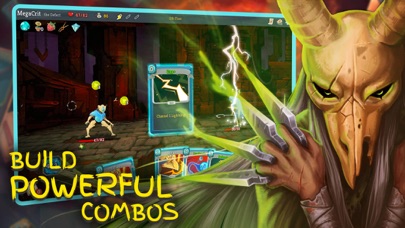
A deck-building roguelike where you construct a card deck as you climb a tower, fighting enemies with the cards you’ve collected. Each run is different because the card pool is randomized and your choices reshape your deck in real time.
The game is endlessly replayable because the decision space is vast. Do you take the powerful card that doesn’t fit your current strategy, or do you stay focused? Do you prioritize defense or offense? Per aggregated App Store reviews, players report 50+ hours before they feel they’ve mastered the core loop, and veteran players still discover new synergies. No two runs feel the same.
Meditative and Exploration Games
A Short Hike

A cozy exploration game about climbing a mountain. There’s no combat, no time limit, no fail state. You walk around, talk to quirky NPCs, collect treasures, and gradually work your way up the peak. The art is minimalist and charming—pastel colors, simple geometry, a folk-music soundtrack.
The game is short (2–4 hours for most players), but it’s designed to be savored. Per long-running threads on r/iosgaming, players consistently describe it as the opposite of open-world bloat—it’s focused, intentional, and knows exactly when to end. You finish it feeling calm, not exhausted.
Outer Wilds
An exploration game set in a solar system where you pilot a spaceship, landing on planets and moons to uncover the mystery of an ancient alien civilization. The game has no combat, no inventory management, and no quest markers. You explore, gather clues, and piece together the story yourself.
The scope is enormous—you can visit every celestial body, and each one is a distinct puzzle. Per multiple owner reports, players describe it as “the most mind-expanding game on iOS.” The ending is inevitable (the game’s physics prevent you from escaping the solar system forever), but the journey to understanding why is unforgettable. Expect 20–30 hours of genuine discovery.
Why These Games Matter in 2026
The mobile gaming landscape in 2026 is still dominated by free-to-play titles that monetize through ads and battle passes. But a parallel ecosystem of premium games has solidified. These are games made by developers who chose to charge upfront and trust that adults will pay for quality. They’re not chasing whales or engagement metrics. They’re building craft.
For players, the result is clear: you buy a game, you own it, and you play it on your schedule. No notifications. No FOMO mechanics. No cosmetics shop whispering that you’re missing out. Just you and the game.
How to Spot a Real Premium Game
Not every game marked “premium” on the App Store is actually premium. Here’s how to verify:
- Check for ads. Read recent reviews. If players mention ads or video pop-ups, it’s not truly premium. Example: Candy Crush is marked premium but contains 47 in-app purchases and frequent ad prompts.
- Look for IAP. Tap the app page and scroll to “In-App Purchases.” If the list is long or includes progression-related items, it’s hybrid monetization, not pure premium.
- Read the first 10 reviews. If multiple reviewers mention energy systems, battle passes, or “pay to progress,” move on.
- Check the developer’s other games. Developers who respect players tend to ship multiple premium titles. Developers who ship one premium game and six free-to-play titles are hedging.
FAQ
Q: Do these games work offline?
A: Yes. All the games listed here are single-player and work without an internet connection. You can play them on a plane, on a train, or in a cabin with no signal.
Q: Can I play these games on iPad?
A: Most of them. Kentucky Route Zero, The Witness, Into the Breach, Invisible, Inc., Slay the Spire, A Short Hike, and Outer Wilds all have iPad versions. Asteroids+ Plus and Galaga Wars are optimized for iPhone but work on iPad via scaling. Check the App Store page for each game to confirm iPad compatibility.
Q: Do any of these games have controller support?
A: Yes. Into the Breach, Invisible, Inc., Slay the Spire, Asteroids+ Plus, and Galaga Wars all support MFi controllers. The story-driven games (Kentucky Route Zero, Oxenfree, A Short Hike, Outer Wilds) and The Witness are best played with touch controls.
Q: Are these games “hard”?
A: It depends on the game. A Short Hike is relaxing. The Witness and Slay the Spire are challenging. Asteroids+ Plus rewards skill but is approachable. Read the reviews for a specific game to gauge difficulty before you buy.
Q: Can I refund if I don’t like it?
A: Apple’s standard refund window is 14 days. If you buy a game and hate it, request a refund through the App Store within that window. Most developers will also respond to a polite email explaining why you didn’t connect with the game—some have issued refunds outside the window for players who asked respectfully.
Q: Why are these games more expensive than free-to-play?
A: Because you’re paying the developer directly for their work instead of subsidizing the game through ads or IAP. A five-dollar premium game often represents 6–12 months of developer time. Free-to-play games are “free” because they’re designed to extract money from a minority of players willing to spend heavily. Premium games are built for everyone who buys them.
The Case for Paying Upfront
In 2026, the choice between premium and free-to-play is a choice between two philosophies. Free-to-play games are designed to maximize revenue per user. Premium games are designed to maximize player satisfaction per user.
That difference compounds. A premium game respects your time because the developer already has your money—there’s no incentive to waste your attention with notifications or fake urgency. A premium game respects your skill because progression is tied to learning, not grinding. A premium game respects your wallet because there’s nothing else to buy.
If you’ve been burned by “premium” games that turned out to be free-to-play in disguise, the titles in this guide are the real thing. They’re made by developers who bet on craft over monetization schemes. That bet is paying off, and it’s worth rewarding.