iPhone Games No Ads No Subscription: True One-Time Purchase

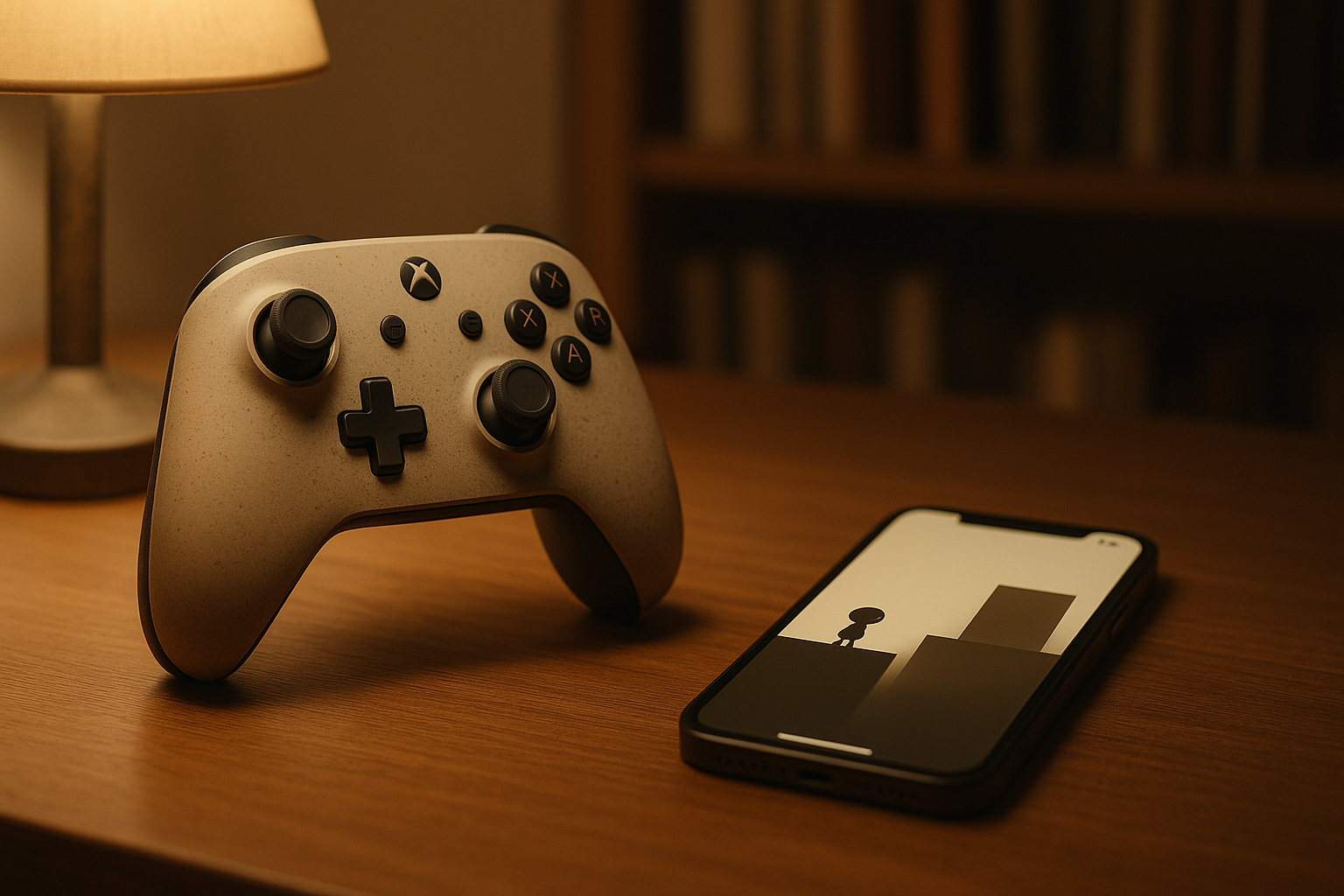
Photo by Onur Binay on Unsplash
iPhone Games No Ads No Subscription: True One-Time Purchase
The App Store is drowning in free-to-play games that aren’t free—they’re time-gated, attention-harvesting machines dressed up as games. But a small, steady current of developers still ship games the old way: you pay once, you own it, no timers, no energy bars, no surprise subscription renewal notifications. This guide maps the real thing.
What “Premium” Actually Means Here
The App Store uses “premium” loosely. A game can be labeled premium and still serve ads between levels, or gate progression behind an in-app purchase. We’re talking about something stricter: a game you buy once and then play without interruption, without ads, without cosmetic or mechanical paywalls, forever.
This model has nearly disappeared from mainstream mobile gaming. The economics are brutal: a one-time purchase doesn’t scale like a battle pass or a gacha system. But indie developers, especially those building arcade-lineage games or craft-made experiences, have stuck with it. They’re not trying to maximize lifetime value extraction—they’re trying to make a game worth playing.
The difference shows. A one-time-purchase game respects your attention. There’s no dark-pattern UI pushing you toward spending more. The difficulty curve exists to challenge you, not to frustrate you into paying. The whole design flows toward engagement through craft, not psychology.
The Mechanics of True Premium Games
Real premium games on iOS come in a few flavors, and understanding the distinctions helps you find what you’re after.
One-time purchase, no IAP, no ads. You buy the game once. It’s complete. Threes! by Sirvo (, puzzle) exemplifies this model—you pay upfront and unlock all content through play. This is the cleanest model and the rarest.
One-time purchase with cosmetic-only IAP. Some developers add cosmetics—alternate skins, color schemes, visual themes—available for purchase after you own the base game. Monument Valley 2 by ustwo games (, puzzle-adventure) offers this approach. The core game is complete and fully playable without them.
One-time purchase, no ads, no IAP, but Apple Arcade exclusive. Apple Arcade games are funded by subscription, which means the developer can afford to ship ad-free and IAP-free. Sayonara Wild Hearts by Simogo ( with Apple Arcade, rhythm-action) is a strong example. If you have an Apple Arcade subscription, these are genuinely premium experiences.
The games in this guide focus on the first category: true one-time purchases with no ads, no IAP, no cosmetic upsell, no subscription requirement.
Finding Them: The App Store Search Problem
The App Store surfaces free-to-play games and subscription services by default. Finding pure premium titles requires specificity.
Use price filtering. When you search for a game category (arcade, puzzle, action), tap the filter icon and set a price range. Anything with a price tag is at least not free-to-play. Then read the reviews—if the game serves ads or pushes IAP, players will mention it immediately.
Check the in-app purchases section. On any game’s App Store page, scroll to “In-App Purchases.” If that section is absent entirely, the game has no IAP. If it lists cosmetics, you’ll see what’s for sale. If it lists progression items or energy systems, skip it.
Read the first 10 reviews. Reviewers are brutally honest about ads and paywalls. If a game claims to be premium but isn’t, you’ll find it in the comments. Look for phrases like “no ads,” “no energy system,” “fully playable,” or conversely, “misleading description,” “ads between levels,” “grindy without paying.”
Follow indie game communities. Subreddits like r/iosgaming, forums on TouchArcade, and indie game Discord servers regularly surface premium titles. The people in these spaces have already done the vetting.
Categories Where Premium Games Still Thrive
Certain genres remain strongholds for the one-time-purchase model.
Arcade-lineage games. Developers building modern reinterpretations of 1979–1985 arcade formats (Asteroids, Defender, Tempest) often use premium pricing. The mechanic-focused design doesn’t rely on progression systems or cosmetics, so the one-time-purchase model fits naturally. Players want a clean, challenging experience, not a treadmill.
Puzzle games. Puzzlers with fixed level sets or procedural generation often ship premium. A good puzzle game doesn’t need to monetize beyond the initial purchase—the puzzle itself is the engagement hook.
Retro-styled games. Games with vector graphics, CRT aesthetics, or synthwave visuals often come from developers who care more about craft than market share. These tend to be premium.
Indie space games. The space-game niche has a strong culture of craft-built, premium titles. Orbital mechanics and realistic physics don’t benefit from free-to-play monetization; they benefit from deep, uninterrupted play.
Text-based and narrative games. Story-driven games, interactive fiction, and text adventures frequently use premium pricing because the narrative experience doesn’t fit the free-to-play loop.
What You’re Paying For
When you buy a premium iOS game, you’re paying for several things that free-to-play games actively work against:
Uninterrupted play. No ad breaks. No energy timers. No “come back in 8 hours” gates. You can sit down and play for as long as you want.
Complete design. The difficulty curve, the feature set, the progression—all of it is designed around player enjoyment, not monetization. If the game is hard, it’s hard because the developer believes that challenge is fun, not because they want to frustrate you into paying.
Longevity. A premium game doesn’t need constant updates with new cosmetics, battle passes, or seasonal content to justify its existence. Some developers do add free updates, but it’s not a requirement for the business model to work.
Respect for your attention. The developer isn’t competing for your eyeballs against a thousand other games. They made one game and want you to enjoy it. That changes everything about how the game is designed.
The Price Conversation
Premium iOS games typically, with most landing. This is genuinely inexpensive compared to console games or PC games, and it’s a bargain compared to a month of a subscription service.
The psychological barrier is real, though. Players have been conditioned by free-to-play to expect zero friction at download. Asking someone to pay upfront feels risky—what if they don’t like it?
The answer: read reviews. Watch gameplay videos. Check if the developer offers a lite version or a free trial. Most premium-game developers understand the friction and work to reduce it. And the reviews on premium games tend to be more honest than on free-to-play games, because premium players have skin in the game.
Red Flags in “Premium” Listings
Not every game with a price tag is actually premium. Watch for:
- “Premium” label with ads mentioned in reviews. Candy Crush Saga claims “premium” status but lists “Boosters” and “Gold” in IAP and displays ads between levels. Check the reviews.
- Energy systems. If the game limits your play sessions with energy that refills over time, it’s not premium—it’s free-to-play with a paywall. Games like Puzzle Quest 3 use this tactic despite premium pricing.
- “Complete the battle pass” messaging. Any game mentioning seasonal content, battle passes, or cosmetic tiers is not pure premium.
- Subscription requirement. Games that require a subscription to play (even if they have an upfront purchase) are not one-time-purchase games.
- “Unlock all content” IAP. If the base game is incomplete without an in-app purchase, it’s not a true premium game.
FAQ
Q: Can I play premium games offline?
A: Most premium games work offline after the initial download. Check the App Store listing under “Requires Internet” to confirm. Arcade and puzzle games typically don’t need a connection; narrative games sometimes do.
Q: Do premium games get updates?
A: Some do, some don’t. Developers aren’t obligated to update premium games, but many add features, fix bugs, or expand content for free. Check the update history on the App Store page—frequent updates suggest the developer is actively maintaining the game.
Q: How do I know if a game is truly ad-free?
A: Check the App Store listing for an “In-App Purchases” section. If it’s absent, there’s no IAP. Read the first 10 reviews—players will mention ads if they exist. If you’re still unsure, download the free trial or lite version if one exists.
Q: Can I refund a premium game if I don’t like it?
A: Apple allows refunds within 14 days of purchase if you haven’t downloaded the game, or within 48 hours if you have. Contact Apple Support through Settings > [Your Name] > Media & Purchases > Purchase History. Be honest about why you want a refund.
Q: Why are premium games so rare now?
A: Free-to-play monetization is more profitable for large publishers. Premium games require developers to bet on quality and word-of-mouth rather than on extraction mechanics. Indie developers and smaller studios are more likely to use the premium model because they’re building for a specific audience, not for maximum market penetration.
Finding Your Next Game
Start with these concrete examples across different genres:
- Alto’s Adventure by Snowman (, endless runner)
- Crossy Road by Hipster Whale (, arcade-puzzle)
- Mini Metro by Dinopolosky (, puzzle-strategy)
- Reigns by Nerial (, narrative-strategy)
- Two Dots by Playdots (, puzzle)
For a broader survey, browse r/iosgaming or TouchArcade’s premium game forums. Every premium purchase signals to the App Store and developers that this model works. In a mobile landscape dominated by attention harvesting, that signal matters.