Best Paid Puzzle Games for iPhone 2026

Photo by Mika Baumeister on Unsplash
Best Paid Puzzle Games for iPhone 2026
The best paid puzzle games on iPhone aren’t the ones that interrupt you with energy timers or nag you to watch ads between rounds. They’re the ones where developers iterate obsessively on a single mechanic, then charge you a fair price upfront and leave you alone. This 2026 roundup covers five craft-built puzzlers that reward patience, spatial thinking, and the kind of focus that free-to-play design actively works against.
Why Paid Puzzlers Beat Free-to-Play
The puzzle-game market on iOS has split into two camps. Free-to-play titles dominate download charts, but they’re engineered to extract time and money through friction—energy systems, difficulty spikes designed to funnel you toward IAP, ads that reset your progress. Premium puzzle games operate on a different philosophy: one upfront payment, then the developer’s incentive is to make the game so good you recommend it to friends.
This matters for puzzle games specifically. A puzzle’s elegance depends on pacing. If a free-to-play game interrupts you every three minutes with an ad or a “spend gems to continue” prompt, the puzzle’s rhythm breaks. Candy Crush’s energy system, for example, forces 30-minute waits between play sessions, fragmenting focus and turning puzzle-solving into a stop-start experience. Paid games let you sit with a problem, experiment, fail, and try again without artificial gates. That’s where puzzle design actually works.
Threes!
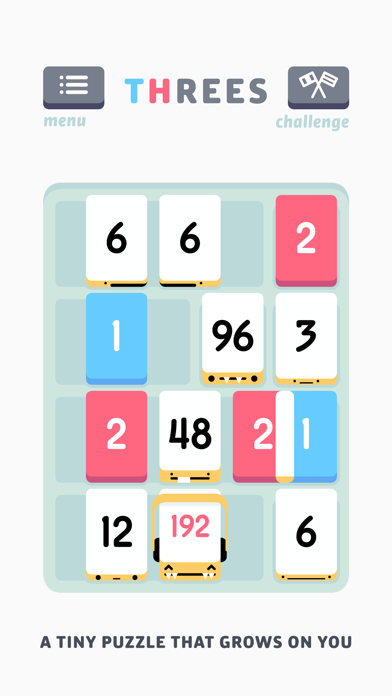
Threes! is the game that everyone else tried to copy after 2014, and most copies (including the wildly popular free variant) missed the point. The mechanic is deceptively simple: slide numbered tiles on a grid, and when two tiles of the same number touch, they merge into the next number. Reach 3 and you can keep combining. The puzzle isn’t in the math—it’s in the foresight required to position tiles so future merges are possible without boxing yourself into a corner.
What separates Threes! from its imitators is the game’s refusal to let you brute-force your way through. Tiles don’t spawn randomly; they follow a fixed queue that you can see, forcing you to plan three or four moves ahead. That constraint exemplifies mechanical clarity—the visible tile queue teaches you the game’s logic without explanation. Players report that the game holds up as a daily-play habit years after purchase, with players returning to beat personal records rather than chasing new content.
The presentation is minimal—pastel colors, soft typography, a gentle audio design that never intrudes. It’s the kind of game that disappears into the experience of pure problem-solving.
The Witness
The Witness is the opposite of minimalism: a sprawling island filled with hundreds of puzzles hidden in architecture, vegetation, and environmental details. The core mechanic is simple—draw a line from the entrance to the exit of a grid-based puzzle—but the game’s brilliance is in how it teaches you to see. Early puzzles introduce basic rules: straight lines, branching paths, color-coded regions. As you progress, the game layers new rule-sets without ever explaining them in words. You figure out the logic by experimenting, failing, and suddenly clicking.
The island itself is part of the puzzle design. Walking from one puzzle area to another, you’ll notice visual patterns that echo the logic you’re solving. The environment teaches you to think in the game’s language. Players consistently report spending 40-80 hours on the island and still discovering new puzzle areas and rule-sets they hadn’t encountered, exemplifying how constraint as design creates depth—each puzzle type is bounded by specific rules, making solutions elegant rather than arbitrary.
This is a premium-tier game in scope and depth. It demands patience and rewards lateral thinking. It’s not for players who want a quick 10-minute brain-teaser; it’s for players who want to disappear into a world of pure logic.
Unpacking
Unpacking inverts the typical puzzle structure. Instead of abstract grids or logic diagrams, you’re placing objects into rooms—a lamp on a nightstand, books on a shelf, kitchen utensils in drawers. The constraint is spatial: each room has limited space, and each object has a specific size and shape. The puzzle is finding the arrangement that fits everything while making the room feel right.
What elevates Unpacking beyond a simple object-fitting game is the narrative woven through the objects themselves. As you unpack across different rooms and time periods, you’re piecing together a story about a person’s life—moves, relationships, changes. The objects carry meaning; where you place them matters not just mechanically but emotionally. Players describe the experience as meditative, with the puzzle-solving serving as a framework for reflection rather than competition. The game’s pacing respects your time—each room takes 15-30 minutes to unpack, letting you make progress in short sessions.
The art direction is exquisite—isometric rooms rendered in a warm, hand-drawn style that makes each space feel lived-in. The audio design is equally thoughtful, with soft ambient music and satisfying placement sounds that reward careful arrangement.
Spelltower
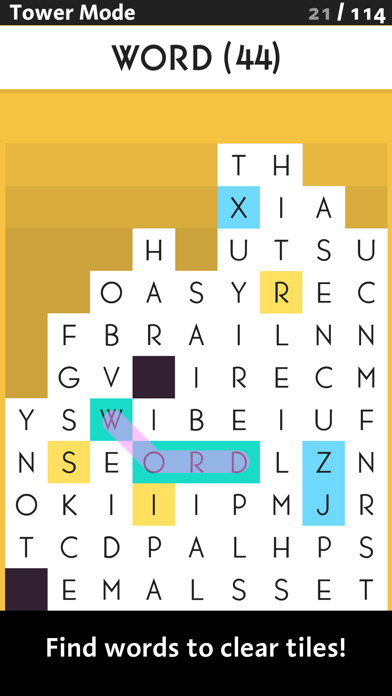
Spelltower fuses word-puzzle mechanics with Tetris-like stacking. You’re building a tower of letter tiles, and to clear tiles, you form words by connecting adjacent letters. But here’s the constraint: you can only connect letters horizontally, vertically, or diagonally on a single level. Longer words clear more tiles and earn higher scores, but you have to think about how the tower will shift and settle as pieces fall.
The game rewards both vocabulary knowledge and spatial planning. Do you spell a short, safe word to clear dangerous tiles near the top, or do you hunt for a longer word that might not fit your current stack? Players with strong vocabulary backgrounds report enjoying the challenge of finding obscure words, while others appreciate the puzzle’s secondary layer: the Tetris-like logistics of managing tower height. This exemplifies constraint as design—the single-level connection rule creates meaningful trade-offs rather than letting you connect any letters anywhere.
There’s also a daily challenge mode that gives you a fixed set of letters and a target word count. It’s the kind of asymmetric puzzle that plays differently depending on your approach, making it endlessly replayable without procedural generation.
Two Dots
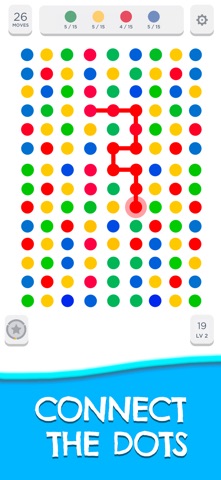
Two Dots is the minimalist’s puzzle game. The mechanic: connect two dots of the same color by drawing a line between them. The constraint: the line can’t cross itself. That’s it. No timers, no scoring systems, no progression mechanics. Just increasingly difficult spatial-logic puzzles.
What makes Two Dots special is its tactile feedback and pacing. Each puzzle typically takes 30 seconds to a few minutes to solve, exemplifying pacing that respects your time—you can complete a puzzle in a waiting room without feeling rushed or stalled. Since its 2013 release, the game’s daily-challenge format has sustained engagement for years, with a devoted community sharing solutions and strategies.
The visual design is clean and modern—flat colors, crisp line rendering, satisfying animations when you complete a puzzle. It’s a game you can play in a waiting room or during a commute without feeling like you’re sacrificing depth for convenience.
What to Look For in a Premium Puzzle Game
When evaluating paid puzzle games, a few qualities separate the craft-built from the forgettable:
- Mechanical clarity. The best puzzle games teach you the rules through play, not through a tutorial. Threes! exemplifies this through its visible tile queue, which shows you exactly how the game works without explanation.
- Constraint as design. Great puzzles aren’t about unlimited options; they’re about finding elegant solutions within tight constraints. The Witness demonstrates this by layering rule-sets that make each puzzle type distinct and solvable.
- Pacing that respects your time. A single puzzle should be solvable in minutes, not hours, unless the game is explicitly a long-form experience like The Witness. Two Dots and Spelltower exemplify this—most puzzles take 5-10 minutes, letting you play in short bursts.
- No hidden monetization. “Premium” should mean one purchase, no ads, no IAP. If a game calls itself premium but includes ad breaks or a shop, it’s premium-in-name-only. All five games here honor this principle.
FAQ
Are these games hard? It depends on the game. Threes! and Two Dots have gentle learning curves; early puzzles teach you the rules while later puzzles demand foresight. The Witness and Unpacking are longer experiences that build complexity gradually. Spelltower difficulty scales with your vocabulary. None of them are designed to frustrate; they’re designed to reward patience.
Can I play these offline? Yes. All five games work entirely offline with no server requirements. You can play on a plane, in a subway, or anywhere without internet.
How long do these games last? Threes!, Two Dots, and Spelltower are indefinite—they have daily challenges or endless modes that keep giving you new puzzles. Unpacking is a 4-6 hour experience. The Witness is 40-80+ hours depending on how thoroughly you explore. None of them are designed to be “finished” and forgotten.
Are there games like these I should know about? Yes. Best Puzzle Games for iPhone 2026: Premium & Ad-Free covers a broader range of puzzle styles including tile-matching and physics-based puzzles. If you want something with more of an arcade feel and time-pressure mechanics, Best Premium iPhone Arcade Games 2026: Top Paid Picks has recommendations that blend puzzle mechanics with action. For longer narrative experiences with embedded puzzles, iPhone Games for Adults: Premium, Story-Driven Experiences includes story-driven games where puzzle-solving advances the plot.
Why are these better than free-to-play puzzle games? Free-to-play games are designed to interrupt you with monetization prompts. A puzzle’s elegance depends on unbroken focus and pacing. Paid games remove that friction entirely—you pay once, and the developer’s incentive is to make the game so good you keep playing, not to make you spend more money.
The Case for Paying Upfront
The puzzle-game landscape has changed since the early days of iOS. When the App Store launched, paid games dominated. As free-to-play became the norm, premium puzzle games became rarer and more valuable. The developers who still make them are betting that players will pay for focus, elegance, and respect for their time.
That bet has paid off. The five games above have sustained player bases years after release, with reviews that consistently praise their craft and fairness. They’re not the biggest games on the App Store, but they’re the ones that players recommend to each other—the ones that prove you don’t need ads, energy timers, or IAP to build something people love.
If you’re tired of puzzle games that feel designed to frustrate you into spending money, these five are proof that the alternative exists and works.


