iPhone Games Like Pac-Man: Modern Maze Arcade Alternatives

Photo by David Valentine on Unsplash
iPhone Games Like Pac-Man: Modern Maze Arcade Alternatives
If you’re hunting for iPhone games that capture Pac-Man’s essential appeal—chase-and-evade tension, maze navigation, pattern recognition, and that satisfying rhythm of predator-prey dynamics—you’re looking at a broader landscape than just direct clones. The maze-chase formula proved so durable that it spawned dozens of spiritual descendants, from minimalist puzzle reinterpretations to full-throttle arcade reimaginations. This guide maps the best premium alternatives on iOS in 2026, all premium purchases with no in-app purchases.
What Makes a Pac-Man Alternative
Before diving into specific titles, it helps to understand which mechanics define the Pac-Man experience. The original isn’t just a maze game—it’s a game about rhythm and prediction. You learn ghost patterns, anticipate their moves, plan routes three steps ahead, and execute precise timing. The maze isn’t a maze-puzzle (solve once, move on); it’s a dynamic arena where the same layout plays completely differently depending on ghost AI state and your own positioning. Pellet collection is the pacing mechanism, not the goal—the goal is survival and score.
Games that capture this essence don’t need to look like Pac-Man. They need to respect that pattern-recognition-under-pressure core. Some do it through direct maze-chase mechanics. Others achieve it through grid-based puzzle logic, resource management under threat, or real-time evasion in constrained space.
Direct Maze-Chase Reimaginations
Ms. Pac-Man
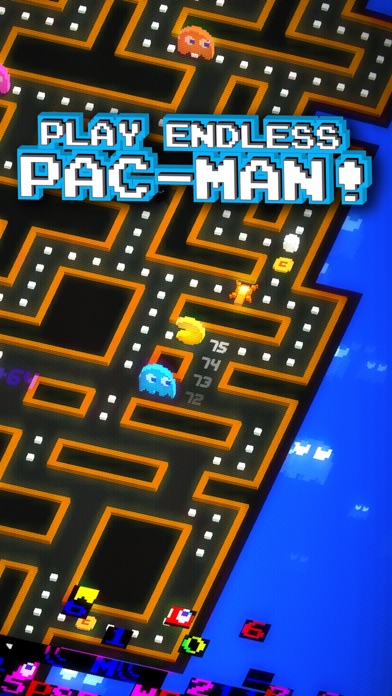
The official port is the baseline. If you want to know whether you actually like Pac-Man or whether you’re chasing nostalgia, start here. Ms. Pac-Man runs faithfully on iOS with touch controls that preserve the original’s timing—a non-trivial feat. The maze layouts differ from the arcade version, ghost behavior is tuned for the smaller screen, and the difficulty curve respects modern player expectations without softening the mid-game spike. The game includes MFi controller support for players who prefer physical input. The premium pricing is justified by the licensing alone, but the port quality backs it up.
Pac-Man Party Royale
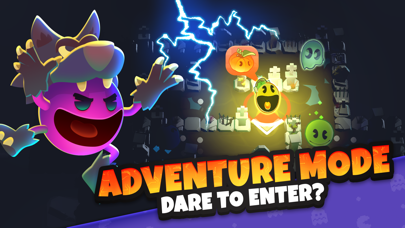
This one trades single-player survival for real-time multiplayer chaos. Up to four players share a maze, competing to collect pellets while ghosts hunt everyone simultaneously. The core mechanic remains pattern prediction and spatial awareness, but the dynamic shifts dramatically—you’re not just evading ghosts, you’re also tracking three other human players who might steal your escape route or lead ghosts directly toward you. The multiplayer pacing is tighter than the single-player campaign, and the game rewards cooperative play as much as cutthroat competition. It’s Pac-Man filtered through the lens of modern party-game design.
Grid-Based Puzzle Alternatives
Dots and Co
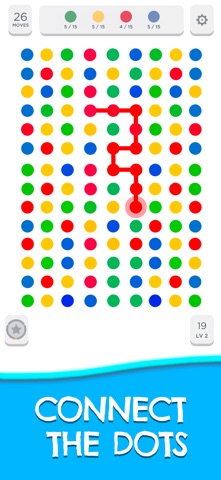
Dots strips the maze-chase formula to its strategic essence: connect dots on a grid, clear patterns, manage a shrinking play space, and anticipate how your moves ripple through the board. On the surface, it’s a puzzle game with no ghosts and no chase. But the pressure-under-time and pattern-prediction cores of Pac-Man live here—you’re reading the board state, planning three moves ahead, and executing under the threat of a ticking clock or a filling board. The craft is in the feedback loop: each move cascades into new configurations, and the best plays feel inevitable once you see the pattern. Dots plays like Pac-Man after you’ve internalized the ghost patterns and the game becomes pure spatial reasoning.
Evasion-Based Action Games
Crossy Road
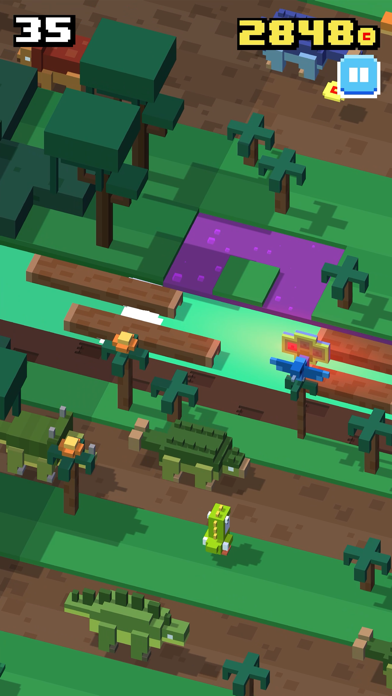
Crossy Road channels arcade-era risk-reward into an endless-runner format. You guide a voxel character across procedurally-generated terrain, dodging obstacles, avoiding traffic, and navigating hazards that get progressively tighter. The core loop mirrors Pac-Man’s rhythm: move cautiously, read the pattern, execute at the right moment, survive one more second. The difference is perspective—you’re moving forward through space rather than circling a static maze—but the prediction-under-pressure mechanic is identical. Each run is a new maze, and each obstacle pattern is a new threat to decode. The procedural generation ensures the game never repeats itself but never feels random either. The difficulty curve is gentler than classic arcade games, making it accessible to players who bounce off the original Pac-Man’s mid-game spike. Note: Crossy Road includes cosmetic in-app purchases but is fully playable without them.
A Monster’s Expedition
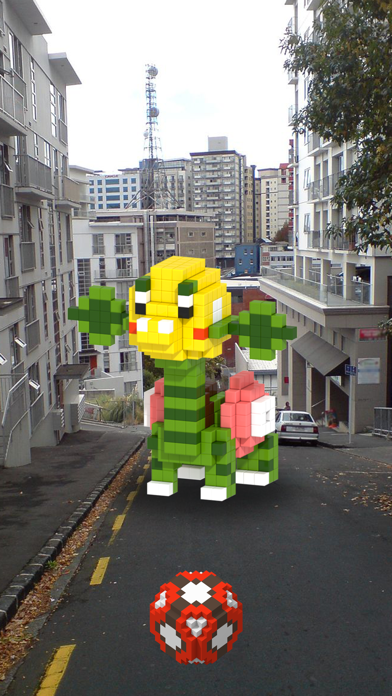
This one wraps maze-chase logic inside a narrative adventure. You’re a monster exploring an island, pushing objects to solve environmental puzzles, and navigating constrained spaces with limited resources. The core isn’t pure chase-and-evade, but the spatial reasoning and pattern-reading that make Pac-Man tick run through every puzzle. You’re learning the rules of each environment, predicting how objects interact, and executing sequences where one misstep locks you out. Every puzzle teaches a new rule without explicit instruction, and the pacing never feels padded. If you want Pac-Man’s brain without Pac-Man’s arcade pressure, this is the play.
Why Modern Maze-Chase Games Matter
The original Pac-Man is still playable and still brilliant, but it’s a product of 1980 arcade hardware and design philosophy. Modern takes on the formula—whether they’re direct reimaginations or spiritual descendants—have the advantage of knowing what Pac-Man proved: that pattern recognition under pressure, rhythm, and spatial reasoning are timeless. They can keep those cores and discard the parts that haven’t aged well (quarter-munching difficulty spikes, repetitive level design, the grinding score-chase that assumes infinite quarters).
The best modern alternatives respect the lineage without imitating it slavishly. They understand that Pac-Man isn’t about the maze; it’s about the dynamic dance between player and AI opponent. That dance works in grid-based puzzles, in multiplayer arenas, in endless runners, in narrative adventures. The format doesn’t matter. The tension does.
Honorable Mentions
Geometry Wars 3: Dimensions captures the arcade-action essence through pure abstraction—no maze, no pellets, just you versus waves of enemies in constrained space. The pattern recognition is there; the pressure is relentless.
Threes! is a sliding-number puzzle where you combine tiles to build larger numbers. Like Pac-Man, every move cascades—you slide tiles left, the board reorganizes, new tiles spawn in unexpected positions, and your next move becomes constrained by your previous choice. You can’t just react; you have to see three moves ahead.
For a deeper dive into arcade-lineage games, check out our guide to retro arcade games with premium modern takes on classics and the best paid arcade games for iPhone.
FAQ
Do any of these games have MFi controller support? Ms. Pac-Man and Crossy Road both support MFi controllers, which significantly improves precision for players with arcade muscle memory. MFi support varies across other titles; check the App Store listing before purchase.
Are all of these premium (no IAP)? Most titles are one-time purchases with no in-app purchases or ads. Crossy Road includes optional cosmetic IAP but is fully playable without spending. Every game listed is free from energy timers and mandatory purchases.
Which of these is closest to the original Pac-Man? Ms. Pac-Man is the official port and the most faithful. Pac-Man Party Royale is also official but trades single-player survival for multiplayer chaos. If you want the exact original experience, Ms. Pac-Man is the answer.
Can I play these offline? All titles listed are fully playable offline. No network connection required.
Which one should I start with if I’ve never played a maze-chase game? Crossy Road is the gentlest entry point—the pacing is more forgiving, and the endless-runner format feels intuitive to modern players. If you want to understand why Pac-Man matters, start with Ms. Pac-Man or Pac-Man Party Royale. If you want Pac-Man’s essence without the arcade pressure, try Dots and Co.
The Takeaway
Pac-Man’s genius wasn’t the maze or the pellets—it was the dynamic tension between player prediction and AI behavior. That tension is timeless, and it translates across formats. Whether you’re chasing it through direct maze-chase gameplay, grid-based puzzles, or endless runners, the best modern alternatives respect the core while building something new. On iOS in 2026, you have more genuine choices than ever. Start with whichever format calls to you, and let the pattern recognition begin.