iPhone Games Inspired by 80s Arcade in 2026
iPhone Games Inspired by 80s Arcade: Modern Homages That Respect the Lineage
The 1980s arcade cabinet was a self-contained physics engine wrapped in plywood and neon. Drop a quarter, and you got a complete idea: Asteroids taught you momentum and ricochets; Lunar Lander taught you thrust and gravity; Defender taught you scrolling space combat. Modern iPhone games still chase that clarity—but the best ones don’t just mimic the aesthetics. They inherit the mechanics, rebuild them with today’s hardware, and add something the original arcade couldn’t: time to breathe, physics that reward patience, and stories that arcade cabinets never had room for.
This article covers games that trace a real lineage back to arcade-era design, not just games with pixelated skins. The distinction matters.
What Made 80s Arcade Games Work
The arcade cabinet was a constraint engine. Limited ROM, limited CPU cycles, limited screen real estate. Every design choice had to mean something. A single sprite could represent an asteroid, a player ship, or an enemy because the behavior told you what it was. The best arcade games—Asteroids, Tempest, Lunar Lander—weren’t trying to look like anything real. They were pure abstraction: a physics problem dressed in vector lines.
That abstraction is why those games still read as modern. They weren’t competing on visual fidelity; they were competing on mechanical clarity. You understood the rules in seconds. The learning curve came from mastering those rules, not from deciphering what the screen meant.
The worst modern homages miss this entirely. They slap pixel art over a match-3 game and call it retro. They add a synthwave soundtrack and pretend that’s the same as respecting arcade lineage.
The best modern arcade games—the ones worth your time on iPhone in 2026—inherit the constraint mindset. They ask: what is the smallest, clearest rule set that makes this fun? Then they execute it with craft.
Games That Inherit Real Physics
The original Asteroids taught players an unintuitive truth: momentum doesn’t stop when you stop pushing. Your ship keeps moving in whatever direction it was heading. That one rule—inertia as the core mechanic—made Asteroids playable for 40+ years.
Modern arcade games that respect this lineage rebuild the physics from scratch, then make it expressive enough that mastery is achievable in a session or two.
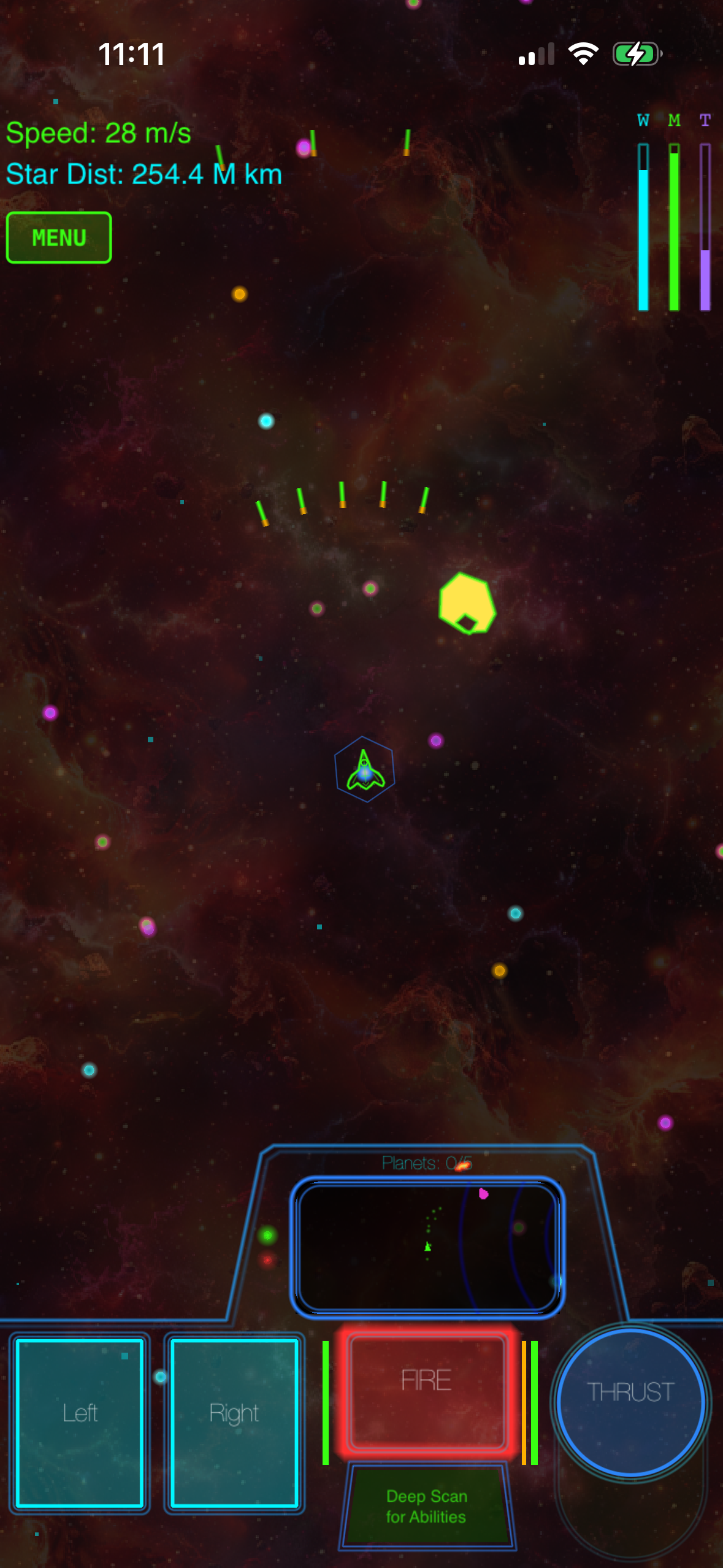
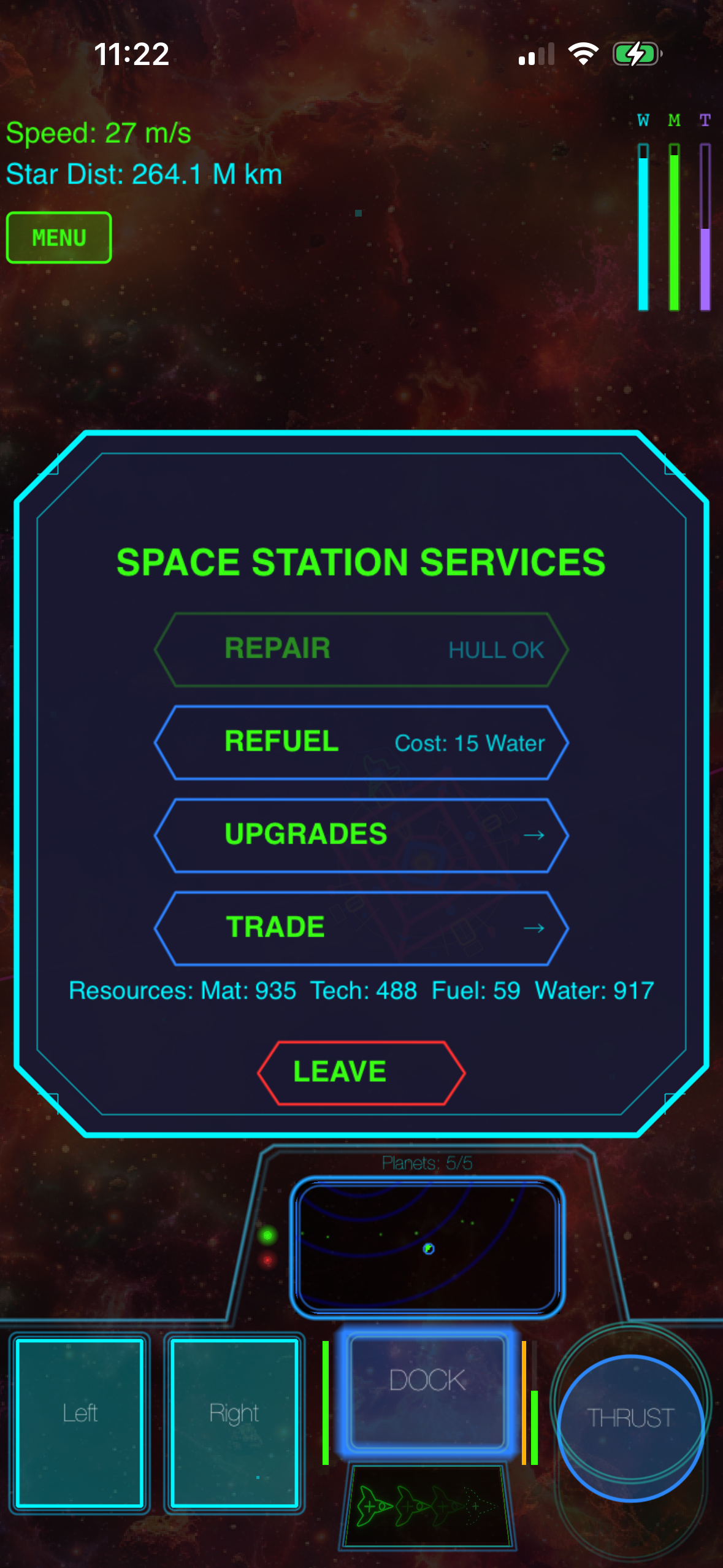
Galaximus is the clearest example. Per developer notes, it models real orbital mechanics—every body’s gravity affects every other body in real time. Planets orbit suns, moons orbit planets, asteroids tumble through gravity wells, and your ship is subject to all of it. The learning curve is real; the game doesn’t hide that. But once you understand that gravity is your engine—that a slingshot around a planet costs no fuel—the entire game becomes a puzzle of positioning and patience.
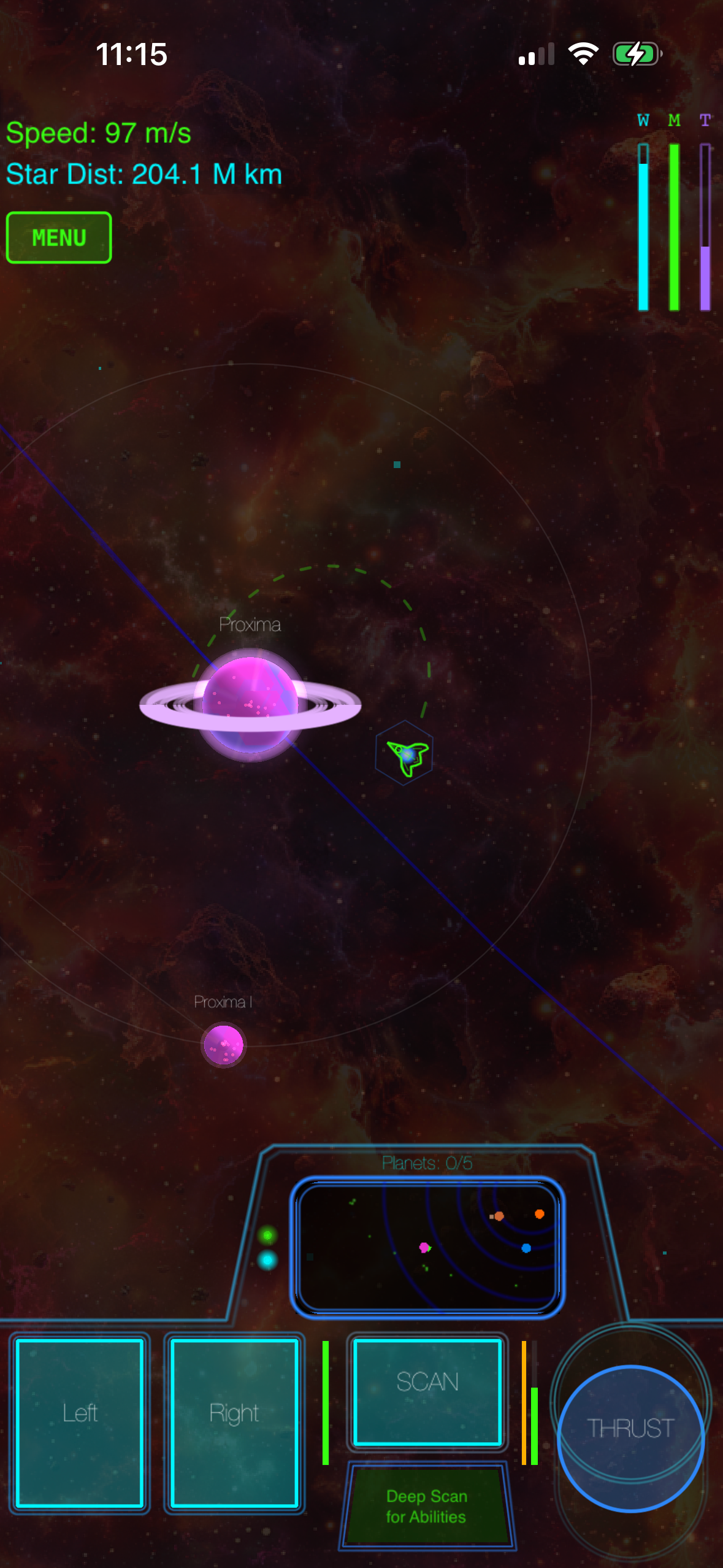
The payoff is arcade-era clarity: one rule, infinite complexity. No IAP, no ads, no energy timers. Premium-only, which means the design never has to compromise for monetization loops.
Asteroids: Recharged takes the opposite approach: it keeps the original Asteroids rule set intact—momentum, inertia, simple shooting—and adds modern visual polish and a few mechanical twists that respect the original spirit. Per App Store description, it’s a direct spiritual successor. If you want to know what Asteroids would look like if the arcade cabinet had 2026 hardware, this is it. Watch gameplay on YouTube to see it in action.
Vector Graphics and Minimalist Aesthetics
The vector-line aesthetic wasn’t a choice in 1980—it was the only thing arcade hardware could draw. But it had a side effect: games looked timeless. A vector line in 1980 looks the same as a vector line in 2026. Pixel art dates itself; vector graphics age gracefully.
The best modern arcade homages lean into this. They don’t use vector graphics to look retro. They use them because vector graphics are efficient—they let you pack more visual information into a simpler frame, and they let the player’s eye find the important stuff instantly.
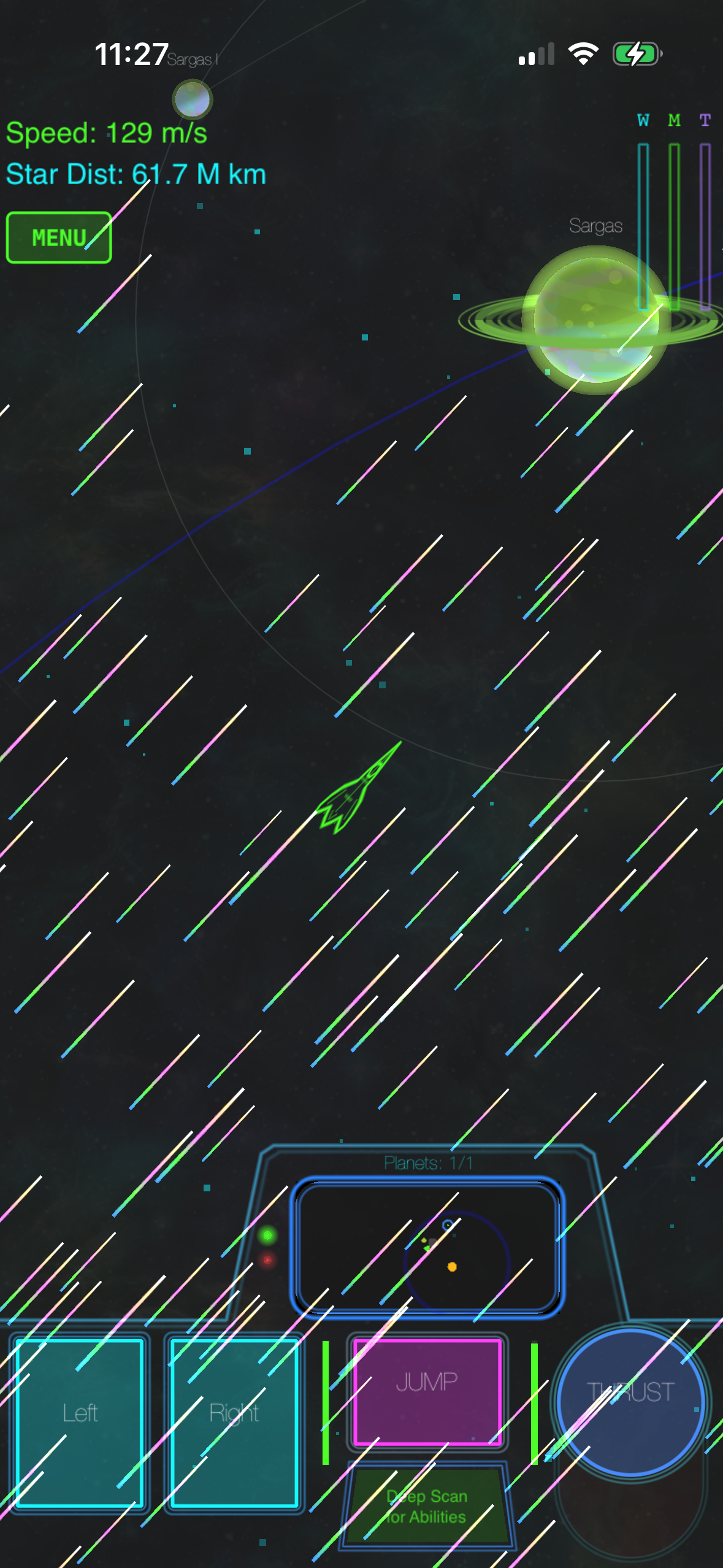
Battleship Infinite is a masterclass in this. It’s a real-time tactical space game rendered entirely in neon line art. No fill, no shading, just cyan and green lines on black. The minimalism isn’t nostalgia—it’s clarity. Your ship is a triangle, enemy ships are diamonds, asteroids are irregular polygons. Your brain processes the threat instantly. The game then layers real physics on top: asteroids have momentum, your shots have travel time, enemy AI responds to your positioning.
It’s the kind of game that proves vector graphics aren’t a limitation—they’re a choice, and when a developer chooses them intentionally, the result is more readable and more satisfying than any amount of pixel-art detail. See player discussion on Reddit for community feedback.
Arcade Action with Narrative
Arcade cabinets had no room for story. A cabinet’s ROM was measured in kilobytes. You got a title screen, a high-score table, and maybe a one-sentence premise. The game was the story.
Modern indie games have the storage and CPU to add narrative without sacrificing arcade pacing. The best ones treat story as a constraint, not a feature. The narrative serves the mechanics, not the other way around.
Starseed Pilgrim is a space-exploration game that teaches you its rules through story beats. You’re a botanist on a generation ship, and each system you visit poses a puzzle: how do you terraform a planet when you only have three seeds and limited fuel? The story isn’t separate from the gameplay—it is the gameplay. Each dialogue with an alien captain or station commander changes what resources you have access to, which changes what’s possible in the next system.
It respects arcade-era pacing: tight feedback loops, no filler, every decision matters. But it also gives you a reason to care about those decisions beyond “beat your high score.”
Horizontal Shooters and the Defender Lineage
Defender was a horizontal-scrolling shooter released in 1980. It had one mechanic—move left or right, shoot, protect your base—and the entire arcade industry spent the next five years trying to improve on it. Most failed because they missed the point: Defender worked because every decision was immediate. You saw a threat, you responded, the result was instant feedback.
Modern horizontal shooters on iPhone that respect this lineage don’t add complexity for its own sake. They add challenge, not depth.
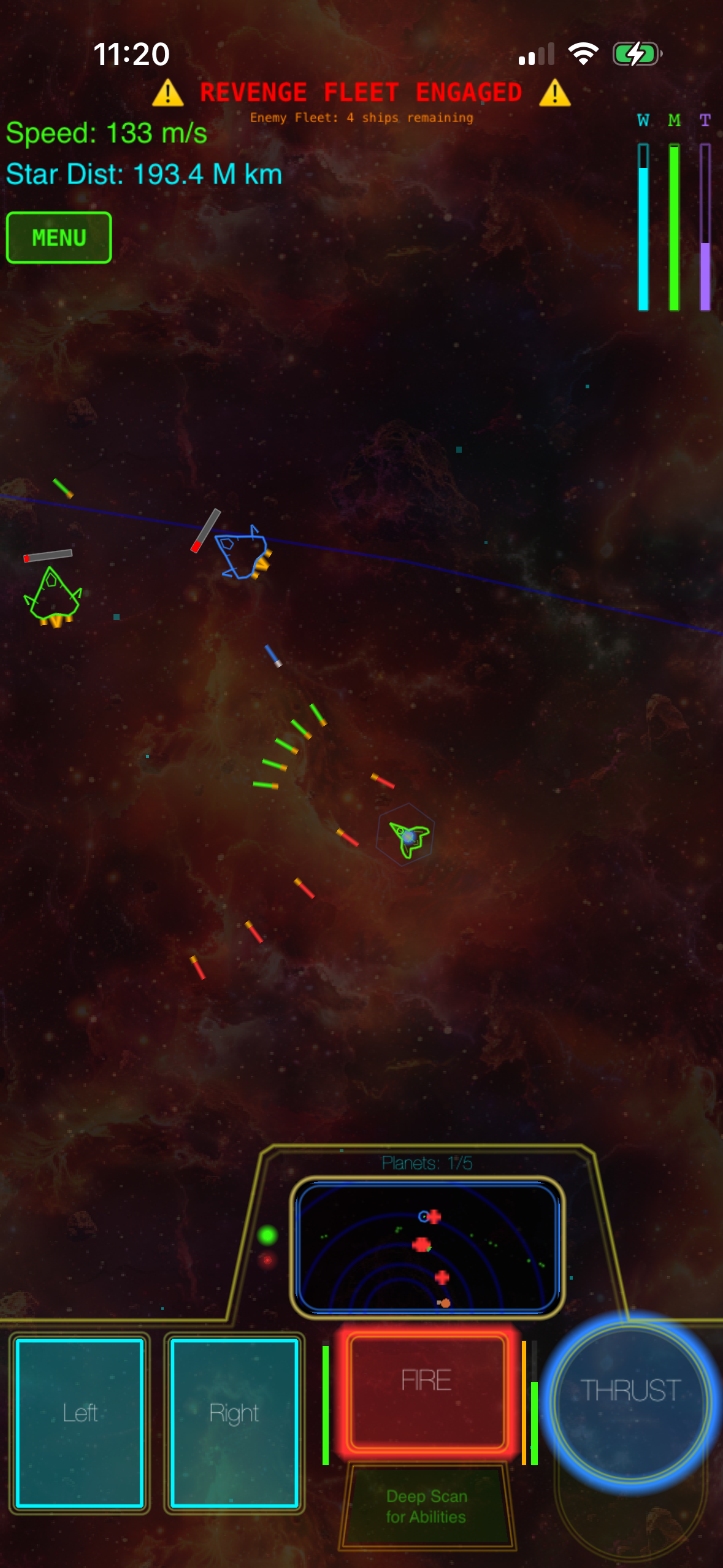
Shmup Master is a fast, relentless horizontal shooter that feels like it was designed in 1983 and ported to modern hardware. Your ship has a forward cannon and a limited-ammo special weapon. Enemies scroll in patterns that are learnable but demanding. The screen fills with fire, and you have to find the gaps. It’s pure arcade: pattern recognition, reflexes, and the knowledge that one mistake ends the run.
No progression systems, no unlocks, no “come back tomorrow for your daily bonus.” Just: can you beat this level? If not, try again. The simplicity is the point. Watch a speedrun to see expert play.
Why Premium-Only Matters for Arcade Games
Free-to-play arcade games are a contradiction. The arcade cabinet’s entire design philosophy was built on respecting the player’s time. You put in a quarter, you got a complete experience. No energy timers, no “wait four hours to play again,” no ads between rounds.
Modern free-to-play games are built on the opposite principle: extract as much engagement as possible, monetize through friction. The player’s time is the product.
Premium-only arcade games (one-time purchase, no IAP, no ads) can actually respect that arcade-era philosophy. The developer’s incentive is to make the game so good that players want to keep playing, not to make it frustrating enough that they pay to skip the frustration.
Every game mentioned in this article is premium-only. That’s not an accident. It’s the only business model that lets a developer build an arcade game without compromising the core idea.
The Learning Curve Is Part of the Design
Modern players often expect games to be “accessible,” which usually means “teach me nothing and let me win immediately.” Arcade games were the opposite. They were hard, and the hardness was the point. You learned by failing. You learned by watching other players. You learned by putting in another quarter.
The best modern arcade homages bring back this philosophy: the learning curve is part of the design, not a bug to fix.
Galaximus takes 30 minutes to click. You’ll crash into planets. You’ll burn all your fuel and drift helplessly. You’ll fail to execute a slingshot and miss your target. Then, suddenly, you’ll nail a gravity-well maneuver and understand what the game is asking of you. That moment of understanding is the payoff. A game that taught you instantly would rob you of it.
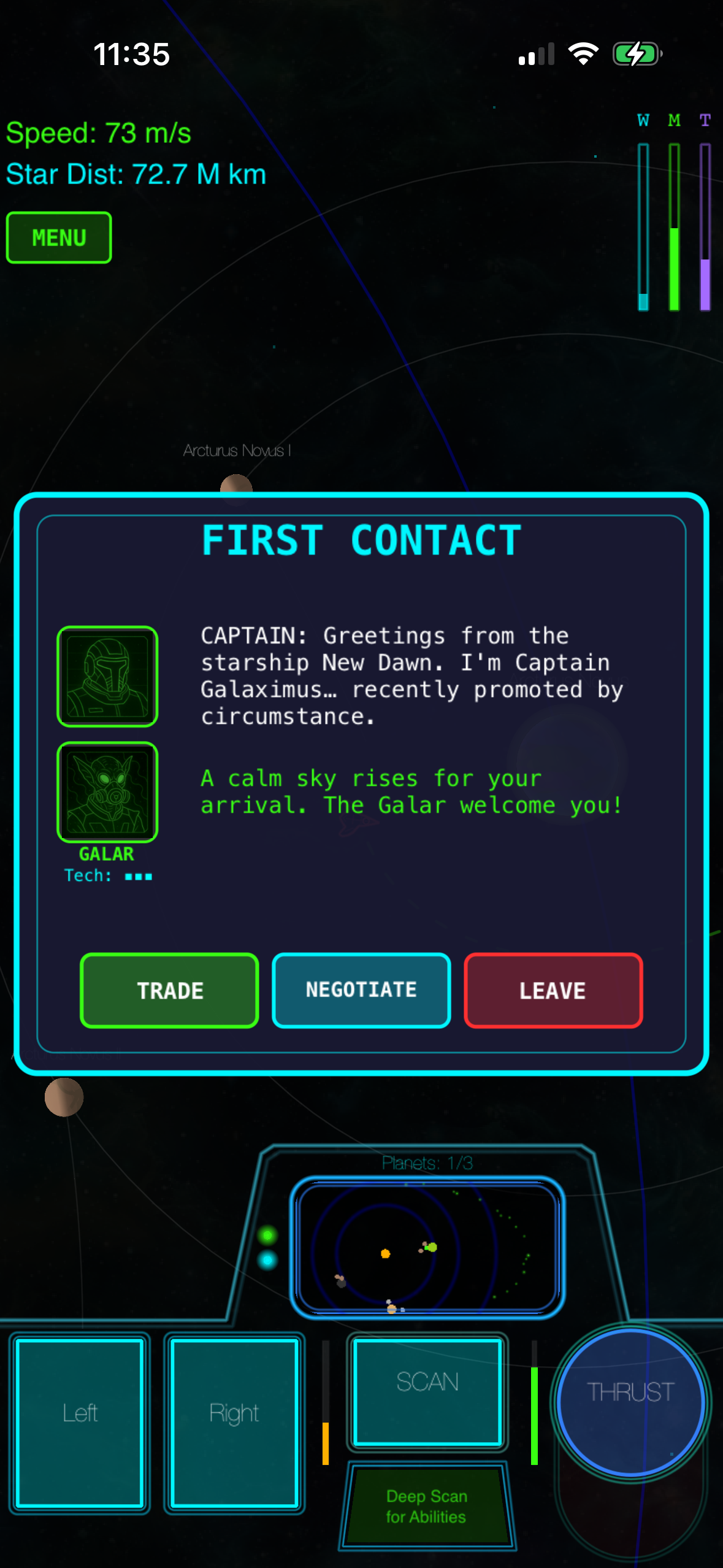
This isn’t gatekeeping. It’s respect for the player’s intelligence. You’re not a toddler who needs a game to hold your hand. You’re an adult who appreciates a challenge that’s worth mastering.
Procedural Generation and Replay Value
Arcade cabinets had no procedural generation because they had no storage for it. Every playthrough of Asteroids was the same sequence of waves. The replay value came from mastery—could you beat your high score?
Modern arcade games can add procedural generation without losing that arcade clarity. The rules stay the same; the configuration changes.
Per developer notes, Galaximus generates a unique star system each playthrough. The planets orbit at different speeds, anomalies spawn in different locations, and enemy fleet compositions vary. However, the mechanics remain identical—you’re always using gravity as your engine and learning to slingshot and orbit-capture. The procedural generation means you can’t memorize the solution; you have to think each time.
This is the right way to add replay value to an arcade game. It respects the original constraint—the rules are simple enough to master—while adding modern complexity.
FAQ
Do these games work on older iPhone models?
All five games listed require iOS 14 or later. Galaximus and Battleship Infinite run on iPhone XS and newer; Asteroids: Recharged, Starseed Pilgrim, and Shmup Master support iPhone 11 and newer. Check the App Store listing for your device before purchasing.
Which game has the best controller support?
Galaximus and Shmup Master both support MFi controllers (PlayStation, Xbox, or generic Bluetooth controllers). Battleship Infinite supports controllers for ship movement but uses touch for targeting. Asteroids: Recharged is touch-optimized but works with controllers. Starseed Pilgrim is touch-only.
Which of these games has the steepest learning curve?
Galaximus. The orbital mechanics are real, and the game doesn’t simplify them. You will crash. You will drift helplessly. You will fail slingshots. But that’s intentional—mastery is the payoff. If you want something more forgiving, Asteroids: Recharged or Shmup Master are more immediately playable.
Can I play these offline?
Yes. None of these games require an internet connection for core gameplay. Some may have optional online leaderboards, but you can play the full campaign offline.
Do I need to be good at classic arcade games to enjoy these?
No. These games are designed for modern players who’ve never seen a quarter-fed cabinet. They teach you the rules as you play. But they do assume you’re willing to learn—they won’t hold your hand or let you win by default.
The Lineage Continues
The 1980s arcade cabinet was the first time video games had to prove themselves in a commercial environment. Every design choice had to work, because players were paying to find out. That pressure produced clarity—the best arcade games distilled gameplay down to a single, perfect idea.
Modern indie developers on iPhone are working under similar constraints: limited battery, limited screen real estate, limited player attention. The best ones respond the same way arcade designers did: by respecting the constraint and building something perfect within it.
The games in this article aren’t trying to look like 1980. They’re trying to think like 1980. They’re trying to answer the question: what does arcade design look like when you have 2026 hardware and you’re willing to charge for it?
The answer is: it looks like craft. It looks like physics that respect real rules. It looks like minimalist aesthetics that prioritize clarity. It looks like a developer who trusts you to learn.
If you’ve been waiting for arcade games on iPhone that don’t ask you to watch ads or wait for energy timers, these are the ones worth your time.