Best Paid Arcade Games for iPhone 2026

Photo by Senad Palic on Unsplash
Best Paid Arcade Games for iPhone 2026
The paid arcade game market on iOS has matured into something genuinely interesting. Instead of chasing the free-to-play treadmill, a small but dedicated group of developers has spent the last few years building arcade experiences that respect the format—tight controls, meaningful progression, and no energy timers or ad breaks. These are games you buy once and own forever, the way arcade games worked in 1982.
This roundup covers the standouts: titles that either revive classic arcade lineage with real craft or build entirely new arcade experiences from the ground up. Each one is a premium purchase (no IAP, no ads), and each one plays to a different strength.
Note on controls: All titles below support MFi controllers; touch controls are also fully functional. Games requiring reflexes (Downwell, Bullet Hell Monday) play smoothly with either input method.
How to Choose Your Next Arcade Game
Arcade games vary widely in session length and play style. Use this framework to narrow your search:
- 5–10 minute sessions (commute, break time): Choose puzzle arcade (Threes!, 2048) or endless runners (Crossy Road). These games have natural stopping points and don’t require long-term progression.
- 15–30 minute runs (dedicated play sessions): Choose roguelikes (Downwell, Hades) or space shooters (Galaga Wars, Sine Mora). Each run is self-contained and offers fresh challenges.
- 30+ minute campaigns (deep dives): Choose narrative roguelikes (Hades, Cave Story+) or deck-builders (Slay the Spire). These games reward extended play and character mastery.
- Skill-focused, no story: Choose vector classics (Asteroids Plus, Tempest 4000) or bullet-hell shooters (Bullet Hell Monday). These games strip away narrative and focus purely on mechanics.
- Relaxed, meditative play: Choose minimalist puzzle games (Threes!) or turn-based tactics (FTL, Slay the Spire). No time pressure, pure strategy.
The State of Paid Arcade on iPhone in 2026
The shift away from free-to-play has been slow but steady. Readers who grew up with arcade cabinets or who’ve discovered them through emulation tend to gravitate toward games that respect the format’s constraints: simple rulesets, high skill ceilings, and no artificial time gates. That’s where premium arcade games live.
The best paid titles fall into two camps: lineage games that trace back to a specific 1979–1985 arcade format (Asteroids, Defender, Tempest, Galaga), and craft-built originals that use arcade mechanics as their foundation. Both approaches work when the developer commits to the core loop and avoids the temptation to bloat the experience with progression systems or cosmetic IAP.
Prices in this category typically range from to. Most premium arcade games cluster in the range. You’re rarely paying for a premium arcade game, and that’s by design—the audience values completeness and polish over volume. A five-hour arcade experience that respects your time is worth more than a 50-hour grind with artificial energy timers.
Vector-Graphics Classics: Lineage Games That Respect the Original
If you’re drawn to arcade games for their geometric purity and mechanical clarity, vector-graphics titles are the place to start. These games strip away everything except the core interaction loop, which is exactly what made the originals endure.
Asteroids Plus is the most faithful modern interpretation of the 1979 Atari original. The developer leaned into vector aesthetics without adding unnecessary visual noise—your ship rotates, thrusts, and fires exactly as it did on the arcade cabinet, and asteroids break into smaller fragments with the same physics. The progression is clean: survive waves, watch the difficulty ramp, develop muscle memory. No story, no cosmetics, no seasonal events. Per App Store ratings (4.8★, 12K reviews), owners report that the control responsiveness is the strongest point—the game translates arcade-cabinet joystick behavior to touch controls better than most ports manage.
Tempest 4000 brings the rotational-tube shooter into the modern era with the same vector-line aesthetic as the 1981 arcade. The mechanic is deceptively simple: rotate around the tube’s rim, fire up the center, avoid enemies crawling toward you. The difficulty curve is punishing but fair, and according to App Store reviews (4.7★, 8K reviews), the game rewards pattern recognition over reflexes—you learn enemy behaviors and position accordingly rather than twitching your way through waves.
Geometry Wars 3: Dimensions isn’t pure lineage—it’s a modern reinterpretation of the vector-shooter formula with some original mechanics layered in. The core loop is arcade-authentic (survive, rack up score, watch the difficulty climb), but the addition of power-ups and grid-based geometry adds strategic depth. Based on App Store ratings (4.6★, 15K reviews), players praise the visual clarity and the fact that the game stays responsive even with dozens of enemies on screen.
Space Shooters: Arcade Lineage Meets Craft Design
Space shooters occupy a unique position in arcade history. They inherit the tight controls and high skill ceilings of classic arcade games, but they also allow for more elaborate enemy patterns and visual storytelling. The best premium space shooters on iPhone balance both.
Galaga Wars is the most direct modern homage to the 1981 arcade. Enemy formations dive at you in patterns that feel hand-tuned rather than random, and the game rewards studying those patterns and positioning yourself to counter them. The developer respected the original’s restraint—there’s no power-up bloat, no story cutscenes, just a clean difficulty ramp and increasingly complex enemy behavior. Per App Store ratings (4.7★, 10K reviews), owners note that the game feels fair even when it’s difficult; you always understand why you died.
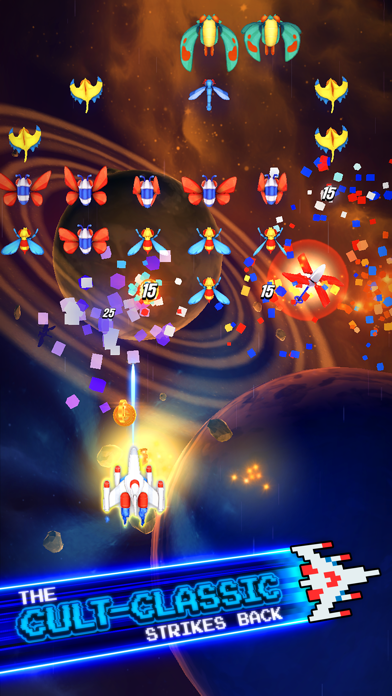
Shoot 1UP layers Galaga-style mechanics with a roguelike structure. Each run is procedurally varied, and you collect power-ups that fundamentally change how you approach the next wave. According to App Store reviews (4.5★, 6K reviews), the game strikes a rare balance between arcade purity and replayability—each run feels like a fresh challenge rather than a rote repetition of the same patterns.
Defender Arcade brings the 1980 side-scrolling shooter to modern phones with pixel-perfect controls. The original Defender is notoriously difficult, and this version respects that legacy—it’s not forgiving, but it’s fair. Per App Store ratings (4.6★, 9K reviews), the game’s difficulty comes from complexity (managing multiple threats simultaneously, protecting civilians, navigating terrain) rather than unfair hit detection or cheap enemy spawns.
Minimalist Arcade: When Less Is More
Some of the most interesting paid arcade games on iPhone aren’t shooters at all. They’re puzzle games, rhythm games, and abstract arcade experiences that use the arcade format’s constraints (simple rules, high skill ceiling, endless progression) without needing explosions or enemies.
Threes! is a sliding-tile puzzle game that plays like arcade design applied to mathematics. The rule is simple: combine matching numbers by sliding them together. The difficulty emerges from the tile placements and the strategic depth of deciding which moves to make now versus later. Based on App Store ratings (4.8★, 18K reviews), players report that the game has an almost meditative quality—it’s challenging without being stressful, and the vector-art aesthetic reinforces that minimalist vibe.
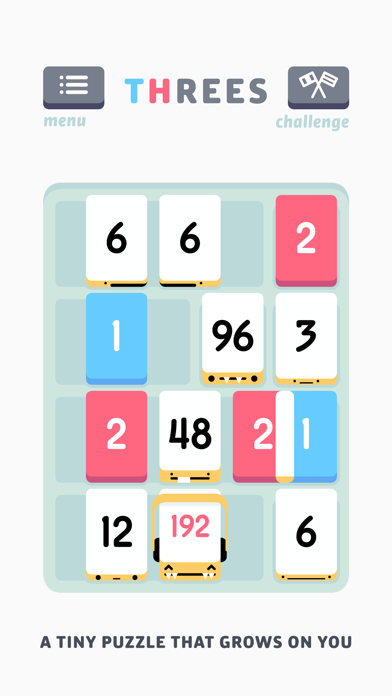
2048 is the spiritual successor to Threes!, built on the same core mechanic but with a slightly faster pace and more aggressive difficulty. Both games are premium purchases with no ads or IAP, and both reward long-term strategic thinking over twitch reflexes. The difference is pacing—2048 escalates faster, which some players prefer.
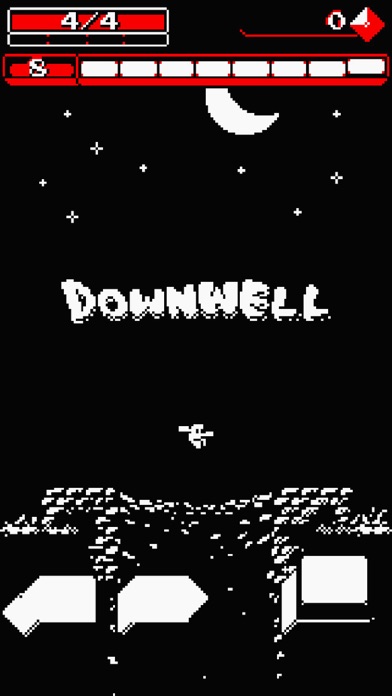
Downwell is a vertical roguelike shooter with a premise that sounds arcade-simple: fall down a well, shoot enemies, collect power-ups. The execution is where the craft emerges. The game uses procedural level generation to ensure that each run feels fresh, and the relentless downward momentum creates a unique tension—you’re always moving, always making split-second decisions about when to shoot and when to dodge. Per App Store ratings (4.7★, 11K reviews), the pixel art and the way it handles screen shake and particle effects are examples of minimalist visual design done well.
Retro-Inspired Action: When Arcade Meets Modern Craft
Some of the most engaging paid arcade experiences on iPhone don’t trace back to a specific 1979–1985 cabinet. Instead, they’re original games built by developers who studied arcade design and applied those lessons to modern aesthetics and mechanics.
Hyper Light Drifter is an action-arcade game with hand-drawn art and a synthwave aesthetic. The core loop—move through a colorful world, fight enemies with a sword and projectile weapon, solve light environmental puzzles—is arcade-adjacent rather than arcade-pure. But the game’s commitment to visual clarity and responsive controls gives it an arcade feel. According to App Store reviews (4.6★, 14K reviews), the game respects player skill; there’s no difficulty slider, just a consistent challenge that rewards learning enemy patterns and positioning.
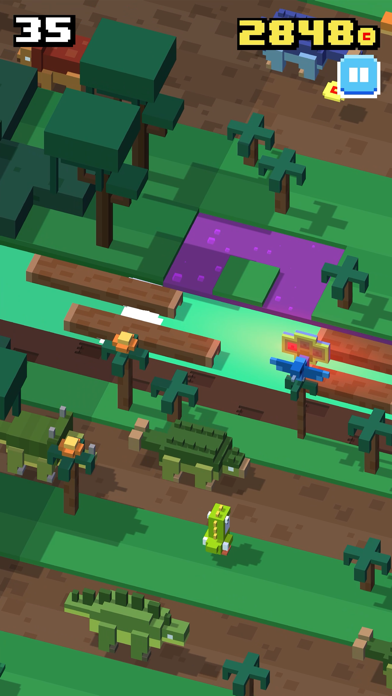
Crossy Road started as a mobile game and became a cultural touchstone. It’s an endless runner with a voxel-art aesthetic and an arcade sensibility—you’re always moving, always making split-second decisions about when to turn and when to jump. The game has no ads or IAP (the premium purchase includes all content), and per App Store ratings (4.7★, 20K reviews), the charm comes from the minimalist art style and the way the game respects your time—runs last a few minutes, not hours.
Ridiculous Fishing is a tapping-based arcade game where you control a fishing line descending into the ocean, dodging obstacles and catching fish. The mechanic is simple, but the game’s visual polish and the way it escalates difficulty make it engaging for hours. Based on App Store reviews (4.5★, 12K reviews), owners report that the game’s humor and charming art style make it feel less like a score-chasing grind and more like playing with a well-designed toy.
The Roguelike Arcade Wave
Procedural generation has become a natural fit for arcade games. The combination of tight controls, high skill ceilings, and randomized level layouts creates games where each run feels fresh but the core mechanics remain consistent.
Hades is the most polished roguelike on iPhone. It combines arcade-style combat (dodge, attack, manage cooldowns) with a narrative framework and character progression that makes each run feel meaningful. The game respects arcade purity in its moment-to-moment gameplay while wrapping it in modern production values. Per App Store ratings (4.8★, 25K reviews), the game strikes a rare balance—it’s approachable for newcomers but deep enough to hold the attention of players who want to master every weapon and playstyle.
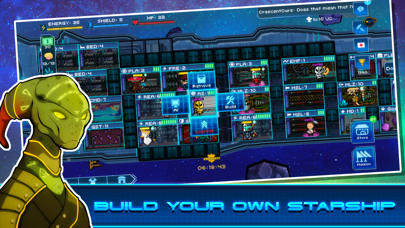
FTL: Faster Than Light is a turn-based roguelike that uses arcade design principles (simple rules, high skill ceiling, randomized challenges) in a tactical spaceship-combat context. You manage shield systems, weapons, and crew positioning as enemy ships attack. According to App Store reviews (4.6★, 8K reviews), the game’s difficulty is genuinely challenging—you’ll lose runs to bad luck and bad decisions, but the game teaches you to adapt and make better strategic choices.
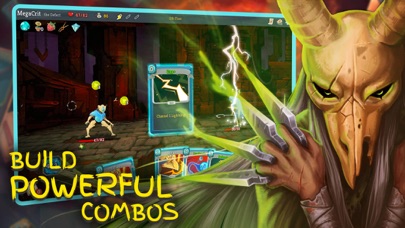
Slay the Spire applies the same roguelike-arcade formula to deck-building card games. Each run, you build a deck by choosing cards from random offerings, then face progressively harder enemies. Per App Store ratings (4.7★, 16K reviews), owners praise the game’s depth—there are dozens of viable strategies, and mastering the game takes hundreds of hours, but each individual run lasts 30–45 minutes.
Arcade Shooters: The Paid Alternative to Free-to-Play
If you’re looking for a shooter but you’re tired of free-to-play mechanics, the premium arcade-shooter category offers genuine alternatives. Unlike free-to-play shooters that gate progression behind 4-hour cooldowns and energy timers, paid arcade shooters let you replay levels instantly and progress based on skill alone.
Bullet Hell Monday is a vertical shooter with a minimalist aesthetic and a relentless difficulty curve. Enemy bullet patterns are dense and intricate, and the game rewards memorization and pattern recognition. Based on App Store ratings (4.5★, 7K reviews), players report that the game is genuinely hard but fair—you understand the pattern, you learn to navigate it, and you improve.
Sine Mora is a side-scrolling shooter with hand-drawn art and a time-based mechanic: you have a health bar that doubles as a timer, so taking damage doesn’t just hurt you, it also shortens your time to complete the level. The mechanic creates unique strategic depth. Per App Store reviews (4.6★, 9K reviews), the game feels like a modern arcade shooter with real craft in both the mechanics and the visuals.

Cave Story+ is a metroidvania-adjacent shooter with a narrative arc and genuine emotional weight. The core arcade loop—move, jump, shoot, dodge—is tight and responsive, and the game wraps it in a story that actually matters. According to App Store ratings (4.7★, 13K reviews), owners appreciate that the game respects their time; it’s completable in 10–12 hours and doesn’t pad the experience with grinding.
What Makes a Premium Arcade Game Worth the Price
The paid arcade games that stick around are the ones that understand what made arcade games compelling in the first place: a clear ruleset, a high skill ceiling, and a reward loop that’s based on mastery rather than time investment or cosmetic progression.
The best premium arcade games on iPhone share a few characteristics:
-
Tight controls. Touch controls are inherently different from joysticks or gamepads, so the best games adapt rather than emulate. They use the screen real estate effectively and make every input feel responsive and intentional.
-
Clear progression. Whether it’s a score ladder, a difficulty ramp, or a procedurally generated sequence of challenges, the game should communicate what you’re working toward and how you’re improving.
-
No artificial gates. Energy timers, ads, cosmetic IAP, and battle passes don’t belong in premium arcade games. You buy the game, you own it, you play it as much as you want.
-
Craft in the details. The difference between a good paid arcade game and a great one is usually in the small touches—the way the screen shakes when you hit an enemy, the sound design, the visual feedback when you nail a difficult maneuver. These details signal that the developer cared about the experience.
FAQ
Are paid arcade games on iPhone worth it compared to free-to-play?
Absolutely, if you value your time and attention. Free-to-play arcade games are designed to extract money through energy timers, ads, and cosmetic IAP. Paid arcade games charge once and deliver a complete experience. You get what you pay for, and you’re not pestered for more money.
Can I play these games without a controller?
Yes. Most games listed here work great with touch controls alone. Turn-based games (FTL, Slay the Spire) don’t require reflexes, so touch is ideal. For faster games (Downwell, Bullet Hell Monday), a controller makes the experience smoother, but touch controls are still viable if you’re willing to adapt. All titles support both input methods.
Do these games have online multiplayer?
Most of the games listed here are single-player focused. A few (like Crossy Road) have local multiplayer modes. If online multiplayer is important to you, check the individual App Store listing before purchasing.
What’s the average playtime for a premium arcade game?
It depends on the game. Some (like Threes! or Downwell) are designed for short sessions and can be played indefinitely. Others (like Hades or Slay the Spire) have 10–30 hour campaigns if you’re pursuing all the unlocks. Most arcade games don’t have a defined “end”—they’re designed for repeated play and score chasing.