Best One-Time Purchase iPhone Games: No Subscriptions

Photo by Onur Binay on Unsplash
Best One-Time Purchase iPhone Games: No Subscriptions
The App Store is drowning in free-to-play games designed to extract money through energy timers, battle passes, and seasonal cosmetics. If you’re tired of that model, the good news is simple: there are genuinely excellent games that ask for a single payment upfront and then leave you alone. No subscriptions. No ads interrupting your flow. No timers telling you to come back tomorrow.
This guide covers the cream of the one-time-purchase crop as of 2026—games that respect your time and your wallet enough to charge fairly once and deliver a complete experience.
Why One-Time Purchase Games Matter
The one-time-purchase model is nearly extinct on mobile, which is exactly why it matters. When a developer charges once and stops, they’ve made a bet: the game is good enough that players will recommend it, and that word-of-mouth matters more than chasing whales through dark patterns.
That bet filters hard. It removes games designed around engagement metrics and leaves the ones built around craft. You’re not paying for a Skinner box; you’re paying for a complete product.
The games in this list range from budget-tier to premium-tier pricing, but they all share one trait: they’re worth every cent because they don’t ask for more cents after you’ve paid.
Arcade-Lineage Games
Asteroids: Recharged
The 1979 arcade classic doesn’t need reinvention—it needs respect. Asteroids: Recharged respects it. The core loop is pure: destroy rocks, avoid collisions, manage your limited shots. But the execution layer is 2026: hand-tuned difficulty curves, visual feedback that sings, and a synth soundtrack that doesn’t wear out its welcome after the hundredth play.
The developer resisted the urge to add power-ups that break the game or mechanics that muddy the original intent. That restraint is rarer than you’d think. Arcade purists will recognize the lineage immediately; newcomers will understand why the format survived 45 years.
Geometry Wars 3: Dimensions
Geometry Wars trades Asteroids’ simplicity for controlled chaos. You’re a glowing shape firing at enemy shapes in a neon void, and the screen fills with bullets fast enough that your reflexes matter. The game layers in power-ups and special weapons without letting them dominate strategy—they’re tools, not crutches.
The three-dimensional twist on the classic twin-stick formula adds depth without overwhelming. Leaderboards are built in, so if you’re the type who chases high scores, the game rewards obsession fairly.
Space and Sci-Fi Games
Galileo

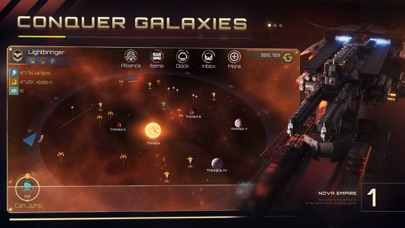
Galileo is a gravity-based puzzle game that asks: how do you navigate a solar system where every celestial body pulls at you? The premise is simple. The execution is meditative. You tap to set a trajectory, and the laws of physics do the rest—sometimes carrying you gracefully to your destination, sometimes throwing you into the sun.
The visual language is minimal: dots, lines, and orbital paths on a dark background. No narrative cruft. No timers. Just you, the physics, and the satisfaction of threading a perfect gravity-assist maneuver.
Outer Wilds
Outer Wilds is a space exploration game where you pilot a fragile spacecraft through a solar system that’s slowly being consumed by a dying star. You’ll solve puzzles involving time loops and black holes while uncovering the fate of an extinct alien civilization through environmental storytelling and discovered logs.
The game respects your intelligence: it doesn’t hold your hand, doesn’t mark quest objectives on a map, and doesn’t explain every mystery upfront. Instead, it gives you curiosity as your only tool. You read logs left by an extinct alien civilization, you experiment with gravity and time mechanics, and you piece together the story of what happened to this solar system. The knowledge you gain is permanent—once you understand something, you understand it. No grinding. No reset mechanics that erase progress. Just discovery.
Puzzle Games
Threes!
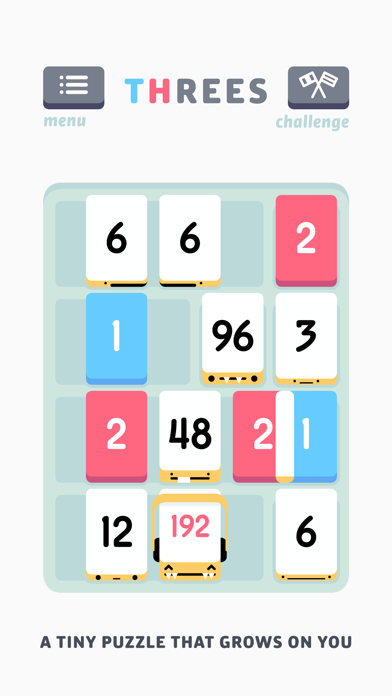
Threes! is a number-sliding puzzle game where you combine tiles to reach higher and higher numbers. It sounds mechanical. It plays like meditation. The game’s genius is in the constraints: you can only move in four directions, and every move shifts the entire board. That simplicity creates a puzzle space that’s been explored by thousands of players and still yields surprises.
The game doesn’t punish you for taking time. There’s no timer. There’s no ad break after three losses. You play until you get bored or until you beat your own high score. The developer charges once and trusts the game’s quality to keep you coming back.
Monument Valley 2
Monument Valley 2 is a puzzle game built around impossible architecture and optical illusion. You guide a character through Escher-like environments where staircases lead sideways and perspective bends. Each level is a visual and mechanical puzzle: navigate the space, find the hidden path, and move forward.
The hand-drawn art is beautiful enough to screenshot. The puzzles are clever without being cruel. There’s no combat, no time pressure, and no way to fail—you progress at your own pace. It’s a game for people who want to feel smart and see something beautiful while doing it.
Action and Adventure
Hades
Hades is a roguelike action game where you play as the son of Hades, escaping the underworld repeatedly. Each run, you fight through procedurally-varied levels, collect power-ups, and either escape or die trying. When you die, you return to the starting chamber and go again—but you’ve unlocked something new, learned enemy patterns, or upgraded a weapon.
The hand-drawn art is exceptional. The voice acting is exceptional. The combat system rewards skill and patience over button-mashing. And crucially, the game respects your time: runs are designed to take 20-40 minutes, so you can fit a complete attempt into a lunch break.
The roguelike structure means you’ll replay the same levels many times, but the procedural variation and weapon diversity keep each run feeling fresh. It’s the gold standard for how roguelikes should feel on mobile.
Hyper Light Drifter
Hyper Light Drifter is a top-down action game set in a neon-soaked world where you slash enemies with a sword and dodge their attacks. There’s no dialogue; the story is told through visual language and environmental storytelling. You’re a drifter moving through a dying world, and the world tells you why it’s dying if you pay attention.
The combat is tight and responsive. The pixel art is gorgeous. The synthwave soundtrack is hypnotic. And the game trusts you to figure things out without a quest log or objective marker. It’s a complete world to explore at your own pace, and it respects that you might want to wander instead of rushing to the next story beat.
Strategy and Simulation
Into the Breach
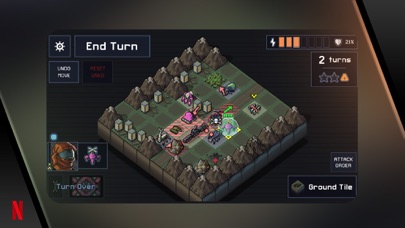
Into the Breach is a turn-based tactics game where you control a squad of mechs defending an island from alien invaders. The twist: you can see all enemy moves before you take your turn. Strategy isn’t about reacting to surprises; it’s about perfect information and perfect execution.
The game is designed around short runs (15-30 minutes) and high replayability. You’ll unlock new mech squads and learn to combine them in unexpected ways. There’s no randomness that punishes you unfairly—only your own mistakes. That clarity makes failure feel earned rather than frustrating.
Narrative Games
Kentucky Route Zero
Kentucky Route Zero is a magical-realist narrative game about a truck driver making his final delivery along a mysterious highway that exists between the real world and something else. There’s minimal interaction—you walk around, talk to people, and experience a story that’s simultaneously grounded and dreamlike.
The game is episodic, with each act released over time. It’s not a game for people who want challenge or action. It’s for people who want to sit with a story, absorb its atmosphere, and think about what it means. If you value narrative craft and visual poetry, this is essential.
Budget-Tier One-Time Purchases ($0.99–$4.99)
Crossy Road — $2.99
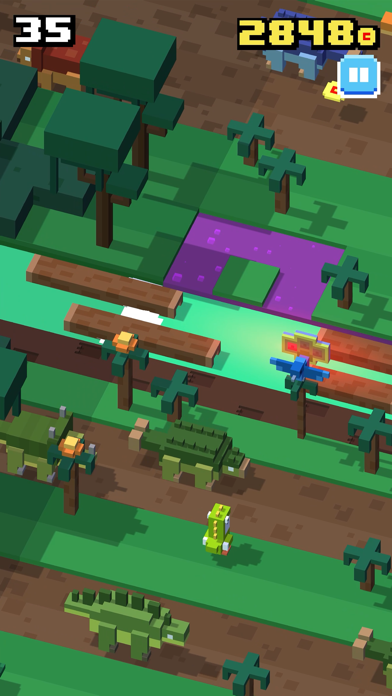
Crossy Road is a roguelike arcade endless-runner with charming voxel art and surprising depth. You guide a character across an infinite landscape of roads, rivers, and obstacles, dodging traffic and hazards. Each run is short (5-10 minutes), but the game’s procedural generation and unlockable characters create hundreds of hours of replayability. The pixel-art aesthetic is instantly appealing, and the difficulty curve is perfectly tuned—early runs feel achievable, but mastering the game takes practice.
Alto’s Adventure — $2.99
Alto’s Adventure is an endless runner that prioritizes atmosphere over challenge. You control a snowboarder descending a mountain at sunset, jumping over obstacles and collecting coins. There’s no fail state; you play until you decide to stop. The minimalist visual design and serene soundtrack create a meditative experience. It’s perfect for people who want to play a game without pressure, and the optional objectives give completionists something to chase.
Mini Metro — $3.99
Mini Metro is a puzzle game about designing subway systems for growing cities. You draw lines connecting stations, and as the city grows, you manage congestion and optimize routes. The game is addictive in the way that Tetris is addictive—simple rules, infinite complexity. Each playthrough takes 15-30 minutes, and the game never punishes you for mistakes, only challenges you to do better next time.
Two Dots — $1.99
Two Dots is a minimalist dot-connecting puzzle game where you draw lines between adjacent dots to clear them from the board. The rules are simple, but the puzzles escalate in difficulty and introduce mechanics like obstacles and time pressure. The game is designed for short play sessions, and each puzzle is solvable in under a minute. It’s perfect for people who want a quick mental break without committing to a longer game.
What to Avoid: Premium-in-Name-Only
The App Store labels many games as “premium” while hiding ads, energy timers, or IAP behind the initial purchase. Avoid:
- Games with “free” in the description but “premium” in the badge (these are usually free-to-play with a paid ad-removal tier).
- Games that unlock features through IAP after you’ve paid the upfront cost.
- Games with energy systems that reset on a timer—that’s a free-to-play dark pattern, not premium design. For example, Candy Crush Saga charges upfront but still uses energy timers to gate progression.
- Games that charge upfront AND run video ads between levels.
True premium games don’t do any of these things. If a game does, it’s premium-in-name-only, and your money is better spent elsewhere.
How to Find New Premium Games
TouchArcade (toucharcade.com) maintains a dedicated Paid Games section that updates daily with new premium releases and sales. You can filter by genre and platform, making it easy to spot quality games before they disappear into the App Store’s algorithmic noise.
AppShopper (appshopper.com) tracks premium game releases and price drops. Set up alerts for specific games or genres, and you’ll get notified when prices change or new releases arrive.
r/iosgaming on Reddit has an active community of players who discuss premium releases and call out quality games worth buying. The subreddit’s weekly discussion threads often highlight underrated premium titles.
For a concrete example: TouchArcade’s Paid Games section recently featured Blasphemous 2, a premium action game with hand-drawn pixel art that would have been buried in the App Store’s free-to-play-dominated charts without dedicated coverage.
FAQ
Are one-time-purchase games really better than free-to-play?
Not inherently—some free-to-play games are well-designed. But the business model matters. One-time-purchase games are designed around player satisfaction and word-of-mouth. Free-to-play games are designed around retention metrics and monetization. The incentives are fundamentally different, and it shows in the design.
Do I need an Apple Arcade subscription to play premium games?
No. Apple Arcade is a subscription service with a rotating library. The games in this guide are permanent purchases on the App Store—you own them as long as your Apple ID exists. Arcade is a different (and legitimate) option, but it’s not necessary for premium gaming.
Will these games work offline?
Most do. Games like Threes!, Monument Valley 2, and Into the Breach work entirely offline. Games like Hades and Outer Wilds require an internet connection to download but work offline after installation. Check the App Store listing if offline play is critical for you.
Are there one-time-purchase games in other genres?
Absolutely. This guide focuses on action, puzzle, and arcade games because that’s where the premium market is strongest. But premium strategy games, narrative games, and even some sports games exist. The principle is the same: charge once, deliver a complete product.
How much should I expect to pay?
Budget-tier games range from. Mid-tier games range from. Premium-tier games range from and up. A few premium games or more, but they’re rare. The App Store shows the price before you buy, so you can make an informed decision.
The Bottom Line
One-time-purchase iPhone games are proof that quality design and fair monetization can coexist. The games in this list ask for money once and then respect your time and attention. No timers. No battle passes. No cosmetics that cost more than the game itself.
If you’re tired of the free-to-play treadmill, these games are waiting. And once you’ve experienced what a complete, fairly-priced game feels like, it’s hard to go back to the energy-timer grind.